Municipal signs that must be read fast
Municipal spaces ask a lot from a sign. People may be walking past, driving by at 40 km/h, carrying bags, pushing trolleys or trying to find a pay point in a hurry. The message has to be clear in a second or two, with no clutter and no fancy lettering that looks clever but reads badly. In Boksburg, Benoni, Germiston and the rest of Ekurhuleni, we keep the focus on legibility, weather resistance and practical mounting.
For council depots, libraries, clinics, parks, halls, transport nodes and service counters, the right sign is usually simple. Names, arrows, hours, rules, warning notices and contact details should be easy to spot in daylight and still hold up when the power is off and the area is lit by vehicle headlights or back-up lights. Our team plans the sign around the site, not just the artwork.
Typical equipment for public spaces
Different municipal jobs need different materials. A small notice board for a reception area is not the same as a roadside directional board or a by-law warning fixed near a pavement. We commonly work with aluminium composite boards, flat aluminium panels, cut vinyl lettering, reflective film, steel posts, wall-mounted panels and laminated print where the use case calls for it. For long-term outdoor use, the mounting hardware matters just as much as the face of the sign.
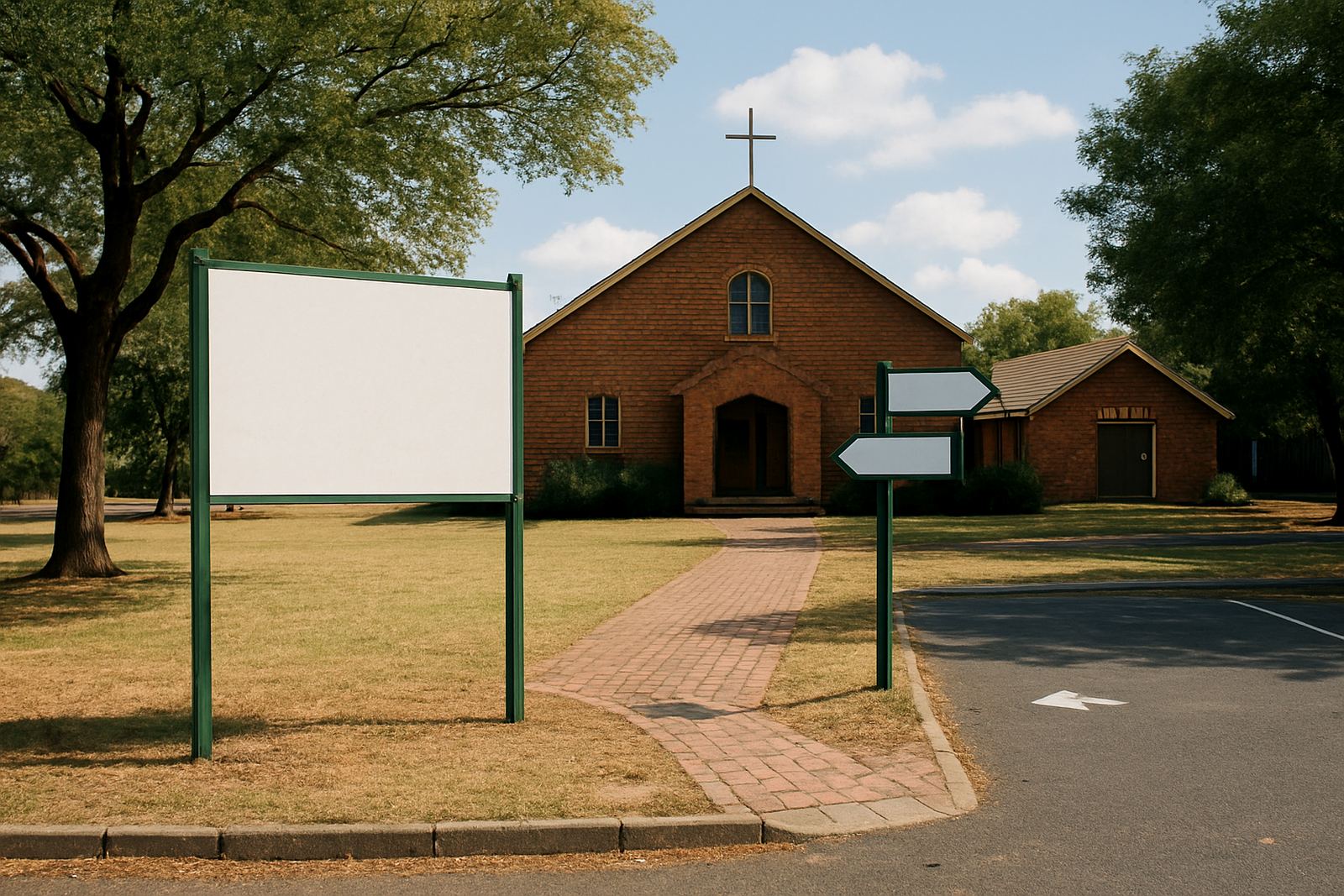
- Directional signs for entrances, parking and pedestrian routes
- Warning signs for restricted areas, hazards and no-entry points
- Wayfinding boards for clinics, libraries, halls and offices
- Regulatory signs with hours, rules and municipal notices
- Asset labels, name plates and identification markers for facilities
Where a space has coastal dust, heavy sun or constant cleaning, we change the material choice accordingly. If the sign is exposed to vandalism or regular washing, we look at thicker substrates and stronger fixings so it does not flap loose or stain at the corners.
Layout planning that saves time on site
Good municipal signage starts with a proper site survey. We look at sight lines, wall space, mounting height, traffic flow and whether the sign must be read from a vehicle, on foot or from across a courtyard. In many cases, the layout also needs to support by-law wording, language choices and official branding without making the board crowded. A sign that looks neat on a monitor can fail badly if the text is too small outdoors.
Our planning usually covers the sign size, wording hierarchy, fixing method and placement. If a sign must sit above eye level, the lettering needs to be larger. If the board is beside a busy road in Kempton Park or Germiston, reflective detail may be needed for night visibility. If it is going in a service yard or public entrance, the edges and corners should be finished so people do not snag clothing or damage the panel.
- Keep the main message short and direct
- Use a strong contrast between text and background
- Leave enough margin around the edge
- Match the mounting height to the viewing distance
- Allow for future wording changes where possible
Common mistakes we see on municipal projects
One of the biggest problems is trying to fit too much onto one board. Municipal notices often need rules, directions, logos, contact points and legal wording, but if everything is treated as equal the sign becomes hard to read. Another common issue is choosing a cheap indoor board for an outdoor job. In a few months the surface chalks, the print fades and the corners start lifting, especially after summer heat and rain.
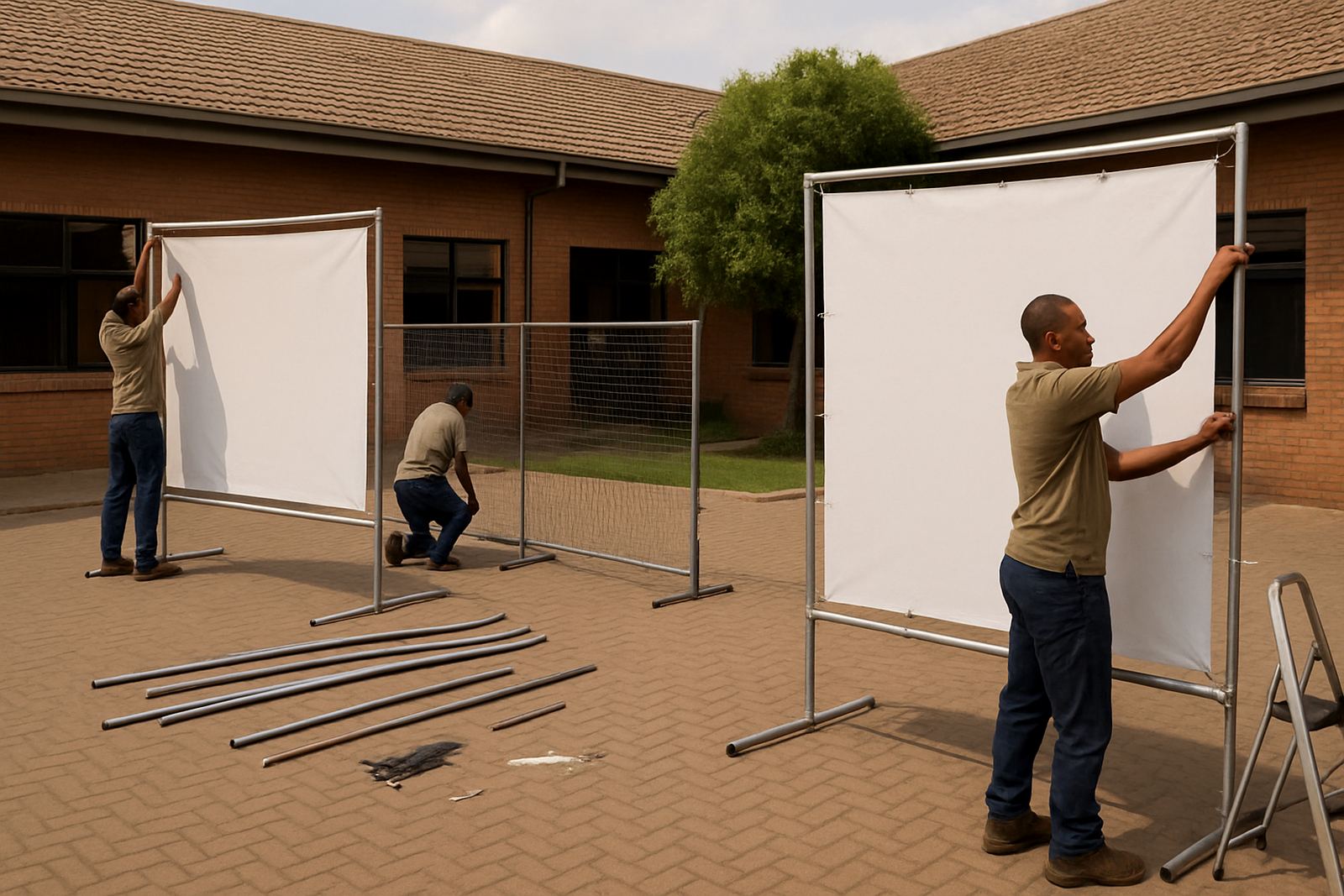
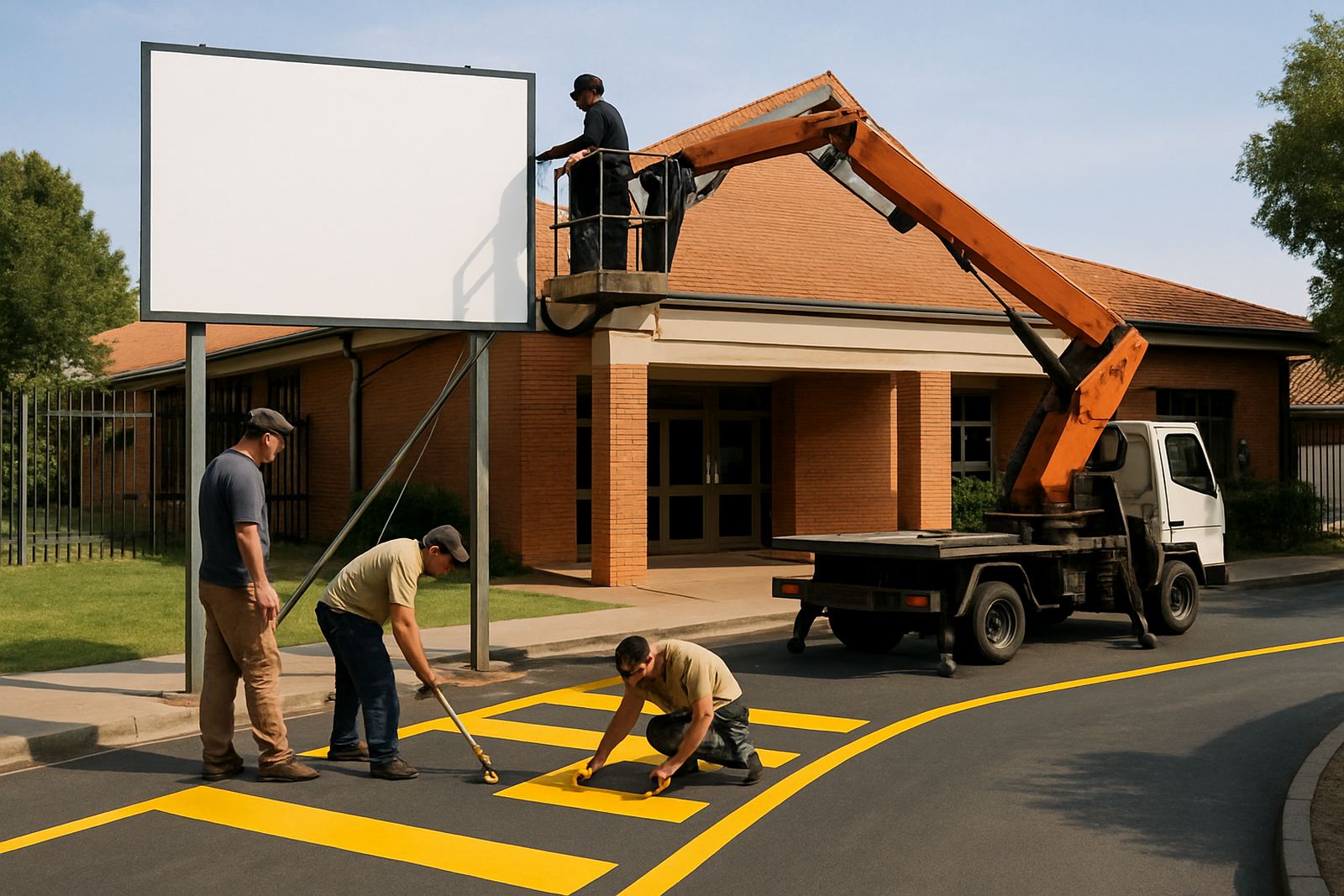
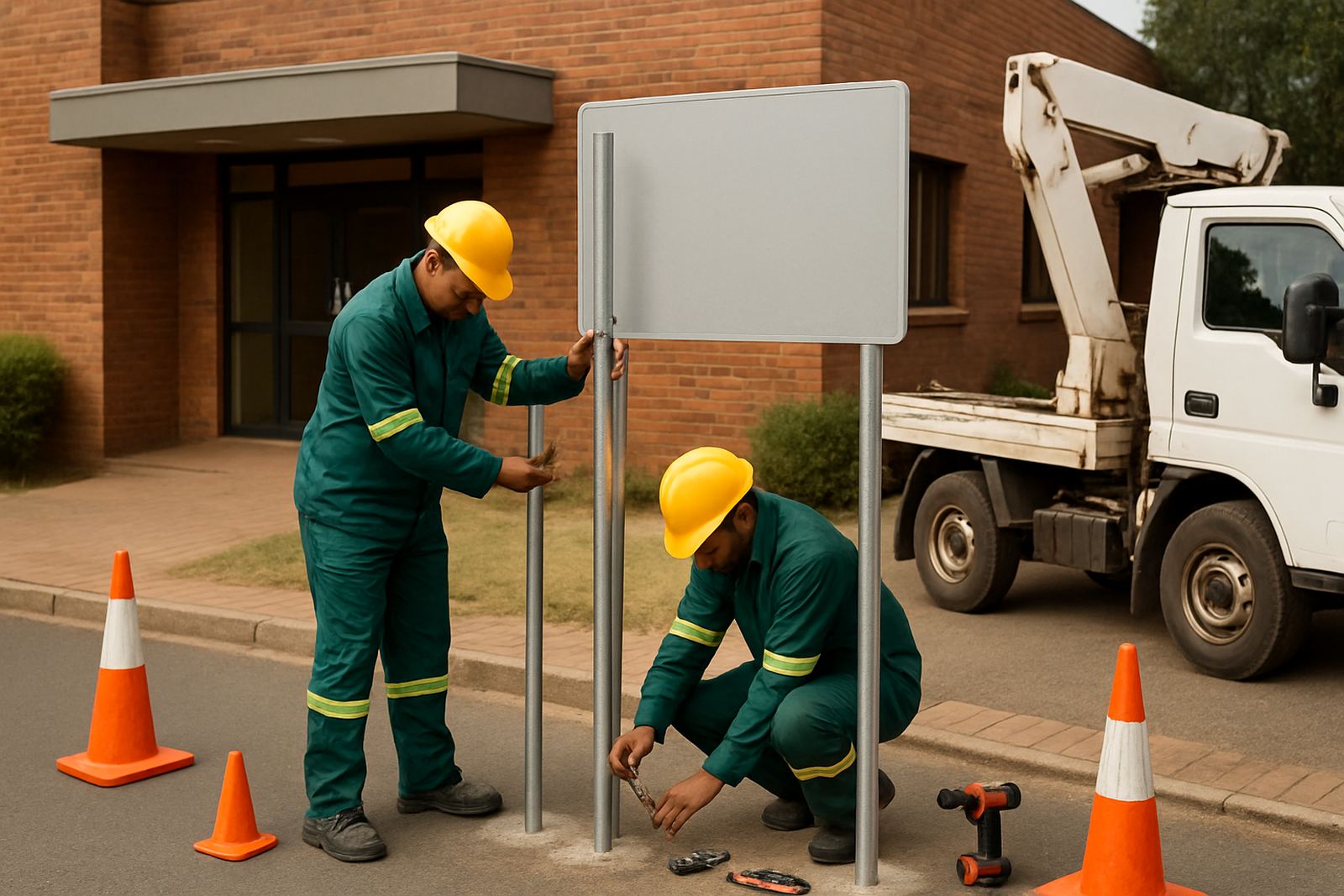
We also see signs fixed with the wrong anchors for the wall or fence type. Brick, plaster, steel and precast concrete all need different fixings. Poor fixing leads to movement, and once a sign vibrates loose the edges crack or the vinyl lifts. On busy public sites we recommend hardware that can handle wind, tampering and routine maintenance. It saves money later and avoids repeat call-outs.
Another mistake is poor maintenance planning. A municipal sign near a station, clinic or sports ground will collect dust, fingerprints and the occasional sticker. If there is no plan for cleaning and replacement, the whole area starts looking neglected. Small fixes on time are much cheaper than a full replacement later.
Budget ranges for municipal signage in Rand
Budgets depend on size, mounting, finish and whether the job includes survey, artwork, manufacture and installation. A basic small identification sign might start from about R450 to R1 200. Medium directional or notice boards often fall between R1 500 and R4 500. Larger outdoor boards, post-mounted directional systems or multiple signs for a site can move into the R5 000 to R18 000 range, and complex municipal projects can run higher if they need reflective material, steel posts, multiple installations or refurbishment work.
For refurbishments, vinyl replacement and maintenance visits, the cost is often far lower than a full new sign. That is useful for public sites that only need a wording update, fresh numbering or a damaged panel replaced. We can also break a rollout into stages, which helps when a department has to work within a set procurement limit or phased budget.
Because every site is different, the right way to price a municipal job is after a proper survey and a clear list of locations. A sign for an indoor foyer in Edenvale will not cost the same as a roadside board in Springs exposed to weather, dust and passing traffic.
How Executive Screen Printers handles the work
We are based in Boksburg and work across Ekurhuleni and greater Gauteng, including Alberton, Midrand and the surrounding areas. The process usually starts with the enquiry form on our contact page, then we arrange a site survey, check the measurements and confirm what is needed for each location. Ayesha Patel handles the design coordination, Johan Pretorius oversees production, and Sibusiso Khumalo manages installations on site. Lerato Mokoena, Nokuthula Dlamini and Pieter Erasmus keep the client side, workshop flow and technical finish in order. Michael Johannes van der Merwe leads the business.
For municipal work, we keep the approach practical. If the job needs cut vinyl, printed panels, safety wording, board mounting, vehicle fitment for fleet assets or silkscreen printing for uniforms and issue items, we coordinate it so the site gets what it needs without unnecessary delays. The result is signage that is easy to understand, built for the weather and installed properly the first time.