Warehouse Signage That Stands Up To Daily Handling
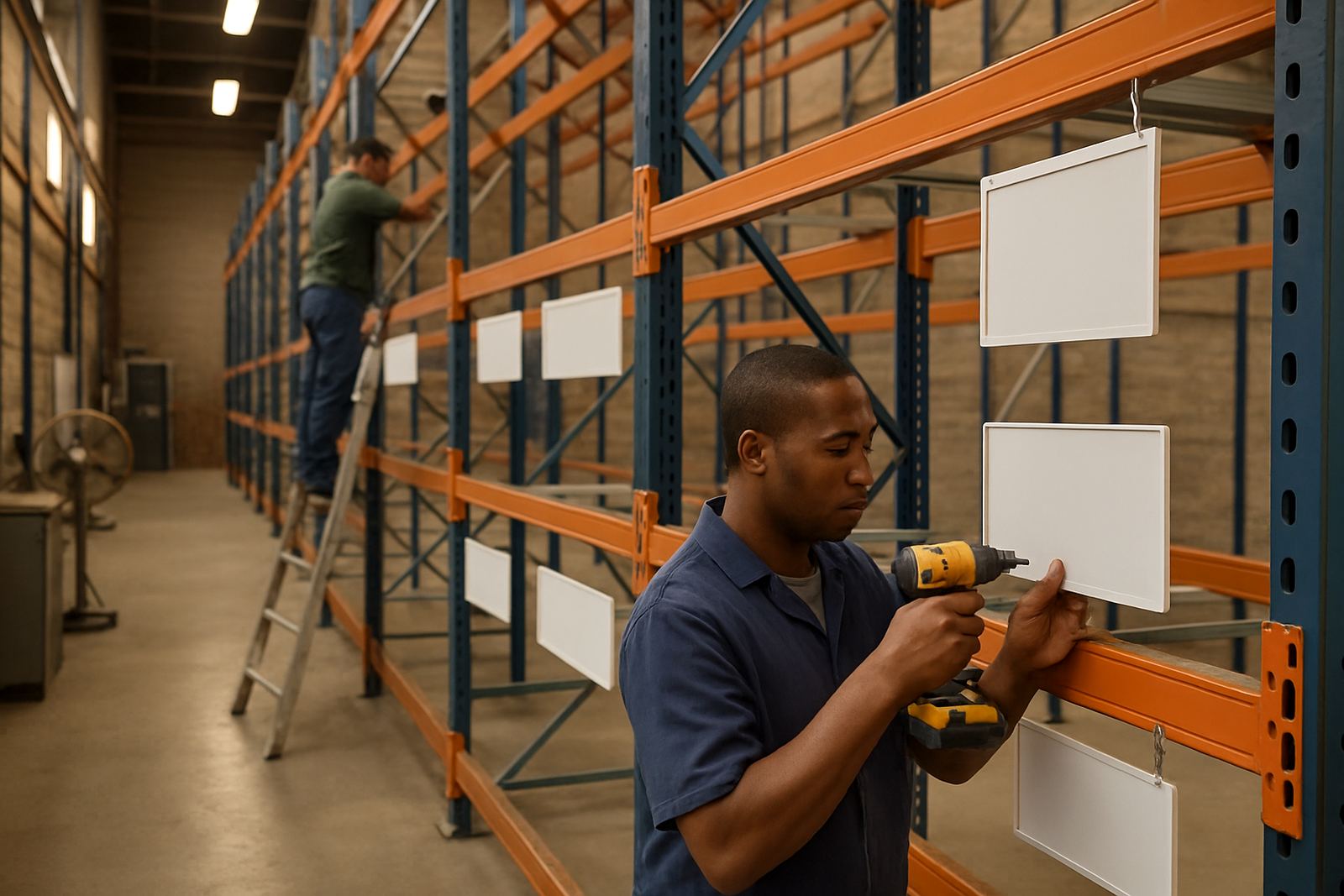
A warehouse is not a showroom. Signs get bumped by pallets, marked by dust, washed down, exposed to heat near loading bays and affected by damp conditions in some coastal deliveries. Good warehouse signage has to stay readable, stay fixed and make sense to the people moving through the space every day.
For most sites in Boksburg, Benoni, Germiston and Kempton Park, we supply signs that are easy to see from a distance and simple to keep in order. That includes bay labels, aisle markers, shelf identifiers, safety notices, directional signs and loading bay boards. If your operation runs on shifts or uses casual labour during peak periods, clear signage also helps reduce mistakes when staff change over.
- Bay numbers and stock zone labels
- Entry, exit and pedestrian control signs
- Forklift routes and no-go areas
- Fire point and emergency information
- Loading bay and dispatch board labels
Typical Equipment For A Working Warehouse
The right mix depends on the size of the building, the number of aisles and whether the site handles storage, dispatch, assembly or value-added packing. We do not push one standard package for every client. A small distribution store in Alberton needs a different setup from a large logistics yard in Midrand or a manufacturing warehouse in Springs.
Most warehouse projects use a combination of rigid boards, cut vinyl lettering and safety graphics. In some cases we also add vehicle markings for internal bakkies, delivery vans or service trucks so the same numbering system carries through to the yard and the road. If you need brand colours matched to corporate guidelines, we can set up artwork before production so the final result stays consistent.
- Foam board or PVC board for indoor identification
- Aluminium composite panels for tougher fixed signs
- Cut vinyl lettering for doors, racking and glass panels
- Silkscreen printed safety signs for repeated messages
- Vehicle fitment for fleet and yard units
Where visibility matters most, we recommend larger text sizes and simple symbols. Too much detail on a warehouse sign usually slows people down. Straightforward wording and strong contrast work better, especially under bright lights or in areas where the power dips during load-shedding and only emergency lighting is on.
Layout Planning Before Anything Goes To Print
Warehouse signage works best when it is planned against the real floor layout, not just a drawing on paper. We often start with a site survey to check aisle widths, gate positions, pallet racking, staff movement and vehicle access. If the layout changes often, we plan for signs that can be updated without replacing the entire board.
Good planning also helps with compliance and day-to-day order. Fire exits need to remain visible, pedestrian walkways should be separate from forklift routes and numbered zones should match your stock control system. If one section of the building is for receiving and another for dispatch, that should be obvious from the entrance point and the internal flow.
- Check sight lines from main entry points
- Mark pedestrian and vehicle movement separately
- Keep emergency signs visible above stored goods
- Use consistent numbering from yard to racking
- Allow space for future bays or extensions
Common Mistakes We See On Busy Sites
One of the most common mistakes is using signs that are too small for the distance they need to cover. Another is fixing signs where they look neat on day one but get hidden by stock, shrink wrap or opened doors. In warehouses with frequent movment, the right height matters as much as the right material.
We also see a lot of mixed signage where old labels stay up next to new ones. That confuses staff and makes stock control harder. If your site has changed hands, expanded or added new product lines, it is worth reviewing the full sign set rather than just replacing the damaged items.
- Using indoor materials in dusty or damp areas
- Placing signs too low near pallets and trolleys
- Mixing outdated labels with new numbering
- Choosing weak fixings for high-traffic areas
- Overcrowding one sign with too much text
Another issue is poor contrast. Pale text on pale background may look tidy in an office, but it does not help a forklift driver at speed or a visitor arriving after hours. Simple colour contrast and clear font sizing usually solve more problems than complicated graphics ever will.
Fixing Methods And Maintenance For Long-Term Use
The fixing method depends on the wall surface, the sign size and how often the area is cleaned. We use mechanical fixings, strong adhesive systems or stand-off mounting where appropriate. For wash bays and exposed entrances, we choose materials that tolerate moisture and cleaning chemicals better than standard indoor boards.
If your site is close to open yard space, wind and dust can shorten the life of poorly fixed signs. Maintenance visits help with loosening fixings, faded graphics and panels that have been hit by equipment. On active sites, it is often cheaper to replace a worn sign early than to wait until a damaged board causes confusion or an incident.
- Indoor identification signs for offices and stores
- Outdoor boards for gates, yards and dispatch areas
- Wipe-clean options for high-contact zones
- Replacement graphics for updated numbering
- Refurbishment and vinyl removal when layouts change
Budget Ranges For Warehouse Signage In Rand
Budget depends on the number of signs, the size of each board, the material chosen and whether installation is needed. A simple internal label set for a small store room may cost from about R1 500 to R3 500. A medium warehouse with bay labels, safety signs and directional boards can fall between R6 000 and R18 000. Larger sites with yard boards, vehicle marking and installation across multiple areas can run from R20 000 upwards.
If you are working to a tight budget, start with the signs that control risk and movement first. Fire exits, pedestrian routes, loading bays and key stock zones should come before decorative or low-priority items. We can phase the work over more than one visit if needed, which helps for sites that must keep operating while upgrades are done.
For businesses in Ekurhuleni and greater Gauteng, delivery and installation can be arranged around trading hours and access restrictions. That is useful for warehouses that operate night shifts, have security gate controls or cannot stop forklift traffic during the day.