Factory Signage Brief for a Busy Germiston Site
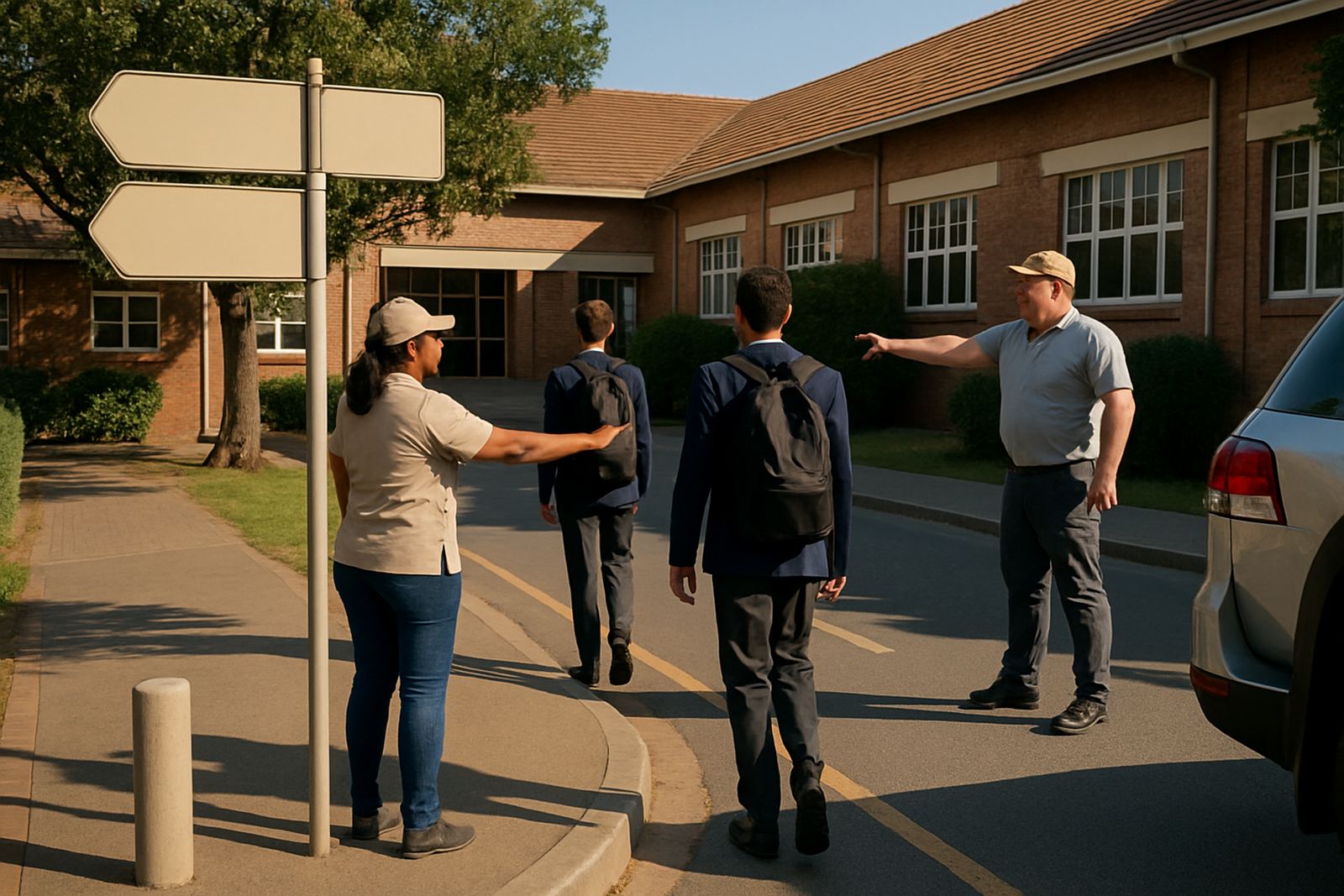
The client was a manufacturing operation in Germiston with a steady mix of staff movement, forklift traffic and visitors coming through the admin side and production floor. Their main problem was not a lack of signs, but signs that had become patchy over time, with some missing boards and others faded from dust, handling and long exposure to workshop conditions. They needed a proper set of internal directional signs, hazard notices and production area labels that staff could trust at a glance.
We were asked to keep the wording practical and direct, with no clutter. The brief called for signs that could be read quickly from a distance, then again at close range when someone was standing at a doorway or machine bay. The site also had a few tight spots where wall space was limited, so we had to choose sizes and mounting points carefully. In a factory like that, one bad placement can block a route or confuse new staff, so we took measurements on site before any cutting started.
What We Found During the Site Survey
The site survey showed a few common issues for an older industrial plant in Ekurhuleni. Some areas had painted block walls, others had steel cladding and a few points were exposed to moisture and fine dust. There were also temperature changes near the production side, which means adhesives and print finishes need to be chosen with care. Power interruptions were also part of the picture, so the client wanted signage that would remain useful even during load-shedding when staff relied more heavily on printed wayfinding.
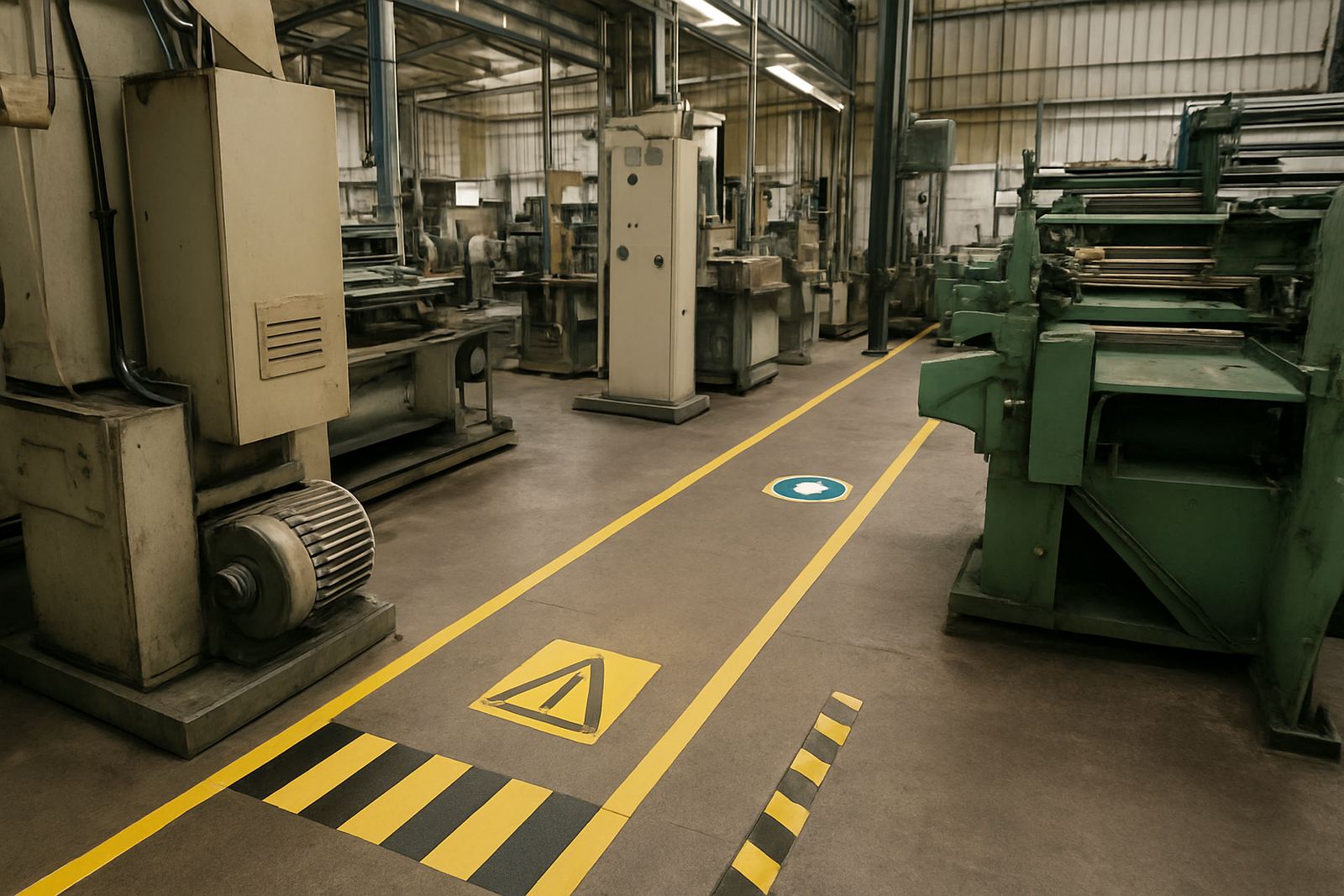
We marked the main problem zones and mapped the route from the receiving point to the production floor, then to the dispatch area and the emergency exits. That let us decide which signs needed to be larger, which could be fixed closer to eye level and where reflective or high-contrast finishes would help. We also checked the likely cleaning routine on site because signs in factory spaces often get wiped down with stronger chemicals than office signs. A finish that looks fine in the workshop can fail quickly if it is not suited to the environment.
- Internal directional boards for staff and visitors
- Hazard signs for machine and access control points
- Production area labels for workflow clarity
- Exit and safety notices for compliance support
- Mounting advice for wall, door and partition points
Materials and Sign Types Supplied
For this project we supplied a mix of cut vinyl lettering, printed safety boards and rigid directional signs, all matched to the different conditions around the site. The larger boards were made for clear reading at corridor and passage distance, while smaller labels were used at doors, storage points and restricted zones. We kept the layout simple, using strong contrast and plain wording so the signs could do their job without needing explanation.
The main production pieces were made on rigid board material suitable for indoor industrial use. Where a notice had to sit near a doorway or on a smoother surface, we used vinyl lettering and panels sized to suit the exact opening. Warning signs were arranged to stay visible beside equipment and at access points, with enough space around the message so it did not get lost in the wall colour or surrounding clutter. We also prepared a few extras for later use, which is sensible on a site that changes internal layout from time to time.
- Rigid boards for directional and hazard notices
- Cut vinyl lettering for doors and room labels
- High-contrast print for quick reading in low light
- Indoor finishes suited to dust and routine cleaning
- Standardised sizes for future additions on the same site
Manufacture, Fitment and Site Installation
Once the artwork was approved, production took two weeks from final sign-off to installation date. The manufacturing side was handled in our Boksburg workshop, where Johan Pretoria?s production team and Ayesha Patel on layout made sure the text, spacing and mounting method were correct before anything was cut. The boards were checked for clean edges and straight alignment, then packed for delivery to Germiston in sequence so the install could move without delays.
Installation was handled by Sibusiso Khumalo and his team. They worked around normal site activity so production would not be interrupted. Some signs were mounted above eye level for general wayfinding, while the hazard notices were placed exactly where someone would need to see them before entering a risk area. In a factory, that detail matters because a sign that sits 300 mm too high or too low can be missed when someone is carrying stock or moving quickly. The team also made sure each board was fixed securely, with neat edges and level placement across the site.
The job was finished in a controlled sequence so the client could check each area as it was completed. That helped avoid guesswork and gave them time to request one or two final position changes before the last fixings were set. It was a straightforward install, but not rushed, which is usually the right way to handle an active factory floor.
Results on the Floor After Installation
After the new signs went up, the site had a much clearer internal flow. Staff could move from receiving to production and then to dispatch with fewer questions, and visitors had better direction from the moment they entered the premises. The hazard signs also gave the safety points more authority because they were now consistent, easy to read and placed where people actually moved. That kind of consistency helps on busy sites where workers rotate between tasks and not everyone knows the layout by heart.
The client also wanted the signage to look organised, not just functional. The finished result did that by giving the internal walls a cleaner, more ordered appearance. It is a small thing, but a site that is properly marked often feels more under control, which helps both staff and management. The client said the new boards made it easier to brief new people on shift changes, and the dispatch side benefited from faster movement through the building.
- Clearer movement between work zones
- Better visibility at hazard and access points
- Less confusion for new staff and visitors
- More consistent appearance across the whole site
- Easier maintenance because the signs were standardised
What We Would Do Again for Similar Factory Projects
If we were doing the same kind of factory signage again in Germiston or elsewhere in Gauteng, we would follow the same process: start with a proper site survey, confirm the daily movement patterns, then build the signs around the actual use of the building rather than a paper plan alone. That is especially important in industrial spaces where production lines shift, stock areas change and safety rules need to be visible at all times.
We would also keep the wording plain and short. On a factory floor, nobody needs a long message when a simple instruction will do the job. The best signs are the ones people notice quickly and understand immediately. For this project, that approach worked well, and it is the same approach we use for manufacturing sites across Boksburg, Benoni, Germiston, Kempton Park, Alberton, Springs, Edenvale and Midrand.
Executive Screen Printers handles sign manufacture, installation, vinyl cutting, maintenance visits and delivery service across Ekurhuleni and greater Gauteng. If a site needs internal direction, safety notices or production area identification, we can measure it, make it and fit it properly the first time.
Key facts
| Client type | Manufacturing site in Germiston |
|---|---|
| Project scope | Internal directional signs, hazard signs and production area labels |
| Main materials | Rigid boards and cut vinyl lettering |
| Timeline | 2 weeks from approval to installation |
| Area covered | Germiston factory floor and internal access routes |
| Installation | On-site fitment with level placement and secure mounting |