
Where an A-frame earns its keep
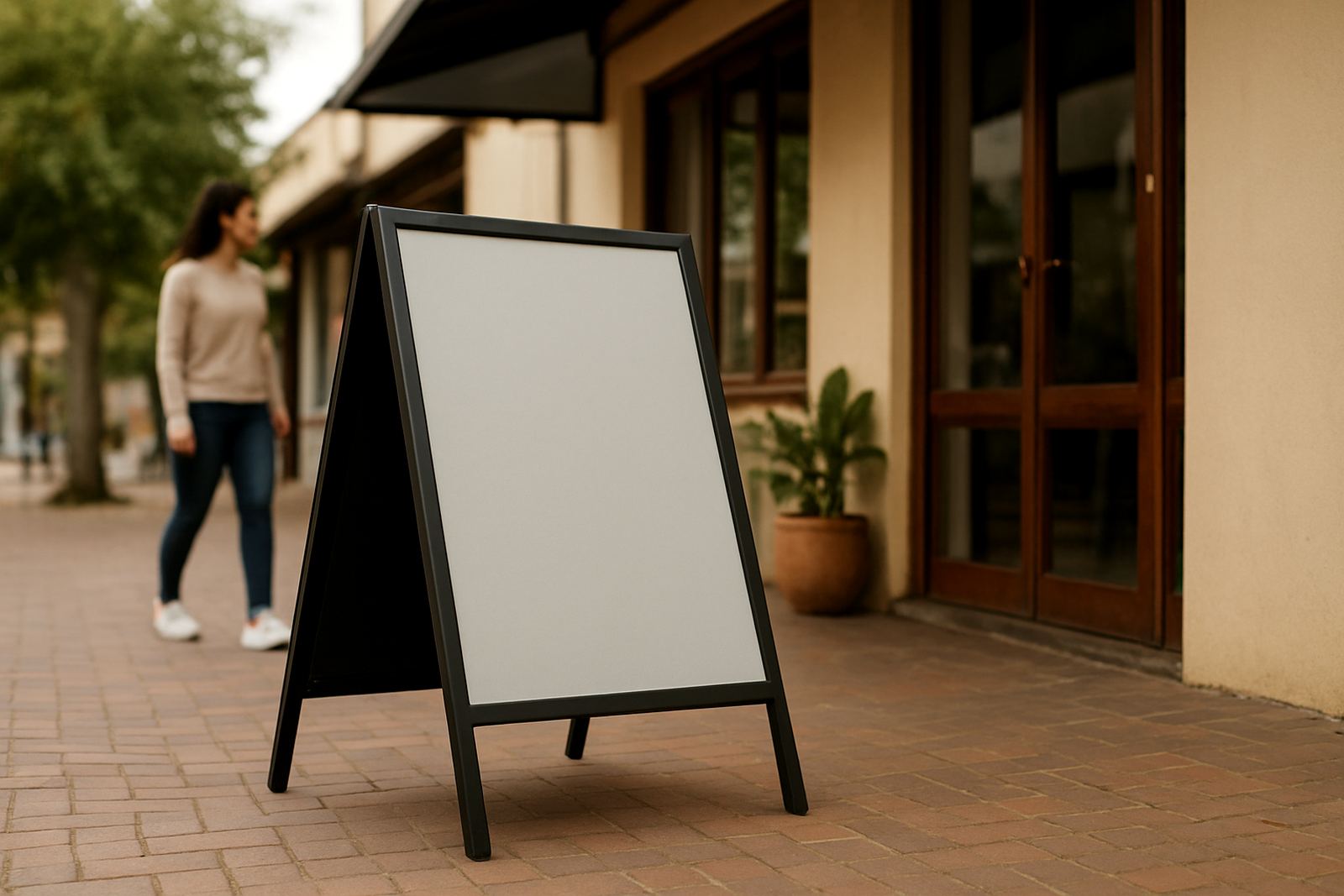
An A-frame is not a fancy solution. It is a practical one for a business that needs to be seen at walking pace, from a vehicle turning in, or by people crossing a forecourt. In Boksburg and nearby areas like Benoni, Germiston and Kempton Park, that usually means shopfronts near taxi routes, medical rooms, takeaways, salons, motor accessory outlets and service businesses that get local walk-ins.
The format works because the message sits low, close to eye level for someone on foot, and can be moved in or out as trading changes. If you need to point people from the road into a yard, direct them to a reception door, or show a promotion only for weekends, an A-frame is a sensible option. It is less useful for long-distance viewing, so do not expect it to carry a message across a busy arterial road.
Check the local rules before you put one outside
Before any pavement sign goes out, check the property rules and the municipal by-law position for the specific site. In Ekurhuleni, pavement space, pedestrian flow and access to neighbouring businesses matter. A sign that blocks a walkway, a ramp, or a municipal verge can be removed, even if the wording is fine.
We normally advise clients to work from the site itself, not assumptions. A good site survey will show whether the frame can sit inside the boundary, whether it needs to be weighted, and whether there is enough clearance for wheelchairs, trolleys and people carrying parcels. In shared centres and office parks, the landlord may also have its own rules on size, hours and placement.
- Keep the sign inside your boundary where possible
- Leave a clear pedestrian path around it
- Use wording that is short enough to read in 3 to 5 seconds
- Check whether the sign may stay out after trading hours
- Make sure it does not block a gate, hydrant or access point
Choose a frame that suits wind, rain and daily handling
An A-frame gets moved, folded, stored, cleaned and bumped. That means the build quality matters as much as the print. Around Gauteng you get dust, summer storms and hard sun, while coastal clients nearby face more humidity and quicker wear on unprotected fittings. If the frame is too light, it becomes a nuisance in the first wind. If the face panels are weak, they start to bow and crack.
For most business use, the better choice is a frame with enough weight to stay put, a finish that tolerates regular wiping, and print material that can handle daily exposure. For permanent use, ask about a more durable face with laminated graphics. For short promotions, a simpler format may be enough, but even then the lettering must stay legible after a few weeks outdoors.
- Weighted base for exposed sites
- Legible lettering from 2 to 6 metres away
- Panels that can be cleaned without lifting the print
- Hinges that open and close without play developing too quickly
- Enough strength for daily put-away and setup
What should go on the sign
The strongest pavement signs say one thing clearly. A price, a direction, a special offer or a short instruction is usually better than a long message. People passing on foot are often looking down at a phone, talking to someone, or moving quickly. Your copy needs to be simple and direct.
In practice, the best boards use large type, one main message and a call to action that makes sense from a few steps away. If your business has more than one offer, rotate the panel or use a double-sided layout so each side does a different job. For estate agents and site entrances, the wording should be plain: office open, entrance here, or let us know you have arrived.
- One message per side where possible
- Large numbers for prices or times
- Good contrast between text and background
- Branding kept simple so the main point reads first
- Contact details only if they are really needed on site
Boksburg example: close foot traffic changes everything
A bakery near a busy Boksburg retail strip is a good example. The owner may have strong morning foot traffic from nearby offices and residential streets, but the shopfront still competes with parked cars, delivery vans and people scanning several stores at once. An A-frame at the right point can lift walk-ins by making the special visible before the person passes the door.
We have also seen this work for a small motor fitment business in the East Rand, where the sign sits just inside the entrance and points customers to reception. In both cases the sign is not there to impress from far away. It is there to catch attention at the exact moment a person decides where to turn. That small difference can make a real difference to daily trade, especially when footfall is uneven and the weather changes quickly.
Keeping it neat, legal and worth the effort
An A-frame only stays useful if it remains clean, straight and easy to move. Dirt, sun fade and bent hinges make even a good sign look tired. Maintenance visits are worth it for businesses that keep the sign outside most days, especially where cleaning staff may not know how to handle it or where trucks and trolleys pass nearby. If the frame is getting scratched, the location may need adjusting.
For clients across Ekurhuleni and greater Gauteng, we normally look at the full job: site survey, artwork setup, manufacture, installation and ongoing maintenance if needed. That way the sign is not just printed and dropped off. It is sized for the site, mounted or weighted properly, and set up for the conditions it will actually face. Michael Johannes van der Merwe and the team at Executive Screen Printers have been working with local businesses since 1988, so the approach stays practical: what will survive the site, what will be read quickly, and what will stay in use without drama.
If your business needs a pavement sign, the question is not whether an A-frame looks nice. It is whether the sign can do a small job very well, every day, without getting in the way.