
Why gentle cleaning matters for vinyl graphics
Vinyl graphics take a fair amount of punishment in everyday use. On company vehicles, the edges pick up dust, road grime and oily residue from diesel traffic, while shopfront windows collect rain spots, hand marks and airborne dirt. If the graphics are cleaned roughly, the surface can dull too quickly and the corners start lifting sooner than they should.
We see this often on bakkies, delivery vans and glass fronts across Boksburg, Benoni and Germiston. A good sign job is made to work hard, but it still needs care. Gentle cleaning protects the colour, keeps text legible and helps prevent damage to the adhesive. In hot weather, especially when panels sit in the sun for most of the day, harsh scrubbing can also leave the material looking patchy.
The aim is not to make the vinyl spotless every single day. The aim is to keep it presentable, readable and serviceable without wearing it out early. That is the practical balance most businesses need.
What to use and what to leave out
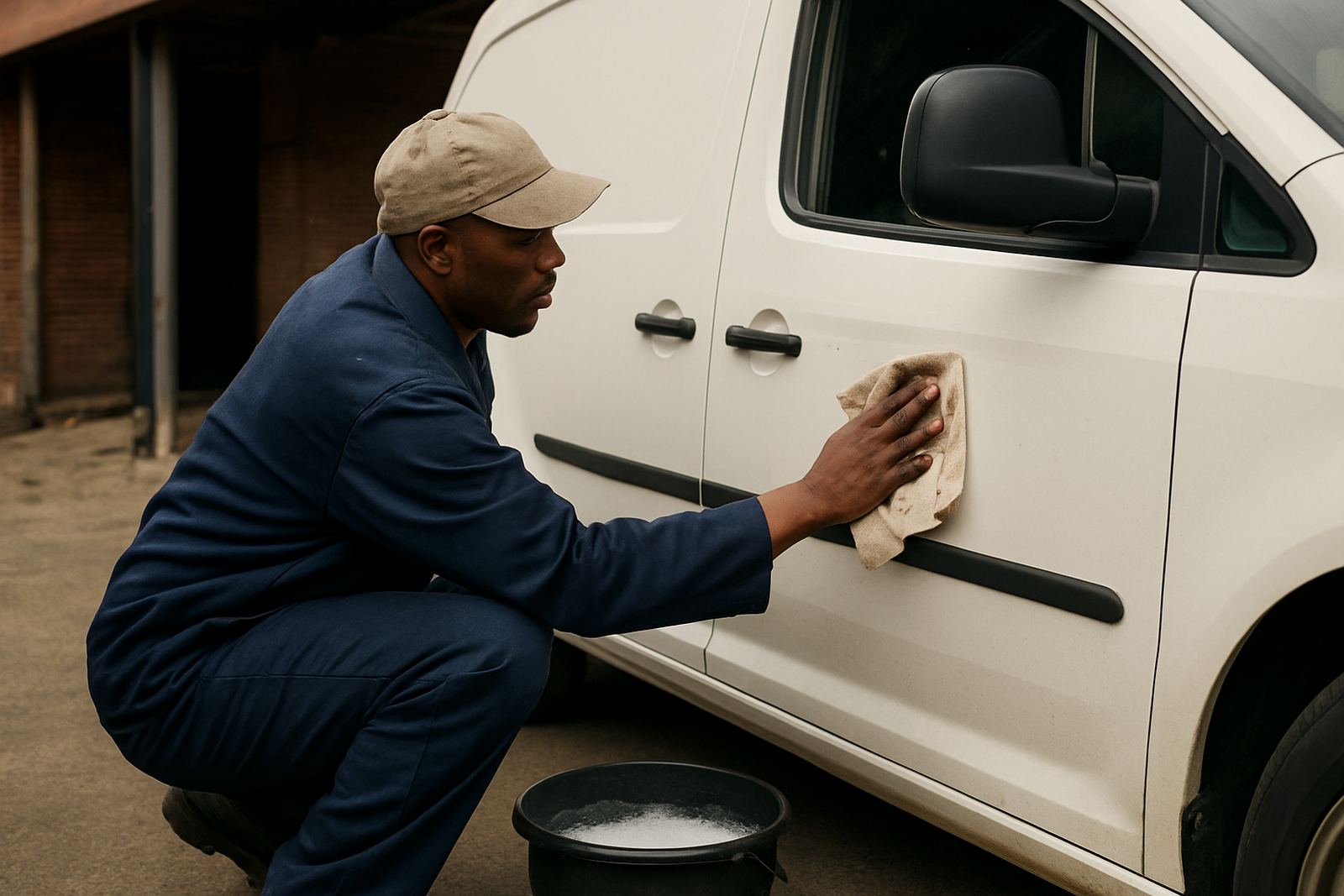
The safest cleaning method is usually the simplest one. Use clean water, a soft cloth or sponge, and a mild soap that does not leave a heavy residue. If you are washing a vehicle, a bucket with lukewarm water works well. For windows and boards, a light spray bottle and a soft microfibre cloth are often enough.
- Soft microfibre cloths for wiping and drying
- Mild soap mixed with water
- Clean lukewarm water for rinsing
- A soft sponge for larger areas
Avoid anything abrasive. Scouring pads, coarse brushes and steel wool can mark the print or scratch the surface. Strong solvents, thinners and bleach can also cause problems, especially on printed vinyl or older graphics that have already been exposed to sun and rain for years. If a stain will not shift with mild cleaning, it is better to ask before trying something more aggressive.
Pressure washers need care too. They can be useful on a work vehicle, but the nozzle should not be aimed straight at edges, joins or lifted corners. Too much force can work water under the vinyl and start lifting it. That is a costly lesson after a quick wash at the depot.
A sensible cleaning routine for fleet vehicles
For fleet markings and branded bakkies, a regular washing routine is easier than letting grime build up for weeks. In Gauteng, dust settles fast and after a few rain showers the dirt dries into a film that takes more effort to remove. If a vehicle runs daily between sites in Boksburg, Alberton and Midrand, a weekly wash is a practical minimum.
When washing, start from the top and work down. Rinse off loose grit first so you are not dragging it across the vinyl. Use gentle pressure and do not let soap dry onto the surface in full sun. If possible, wash in the shade or early in the morning before the panel heats up.
- Rinse first to remove loose grit
- Wash with light pressure and mild soap
- Dry with a clean cloth to avoid water spots
- Check corners and edges for lifting while cleaning
If a vehicle is used on construction sites or near quarry dust, the graphics may need a quicker wipe-down during the week. That is often enough to keep the sign readable until the next full wash. Small habits make a difference, and they save money over time.
Window graphics and shopfront signs need a different touch
Window graphics are often cleaned more often than vehicle graphics because they are at hand level and easier to see when they are dirty. Finger marks, cobwebs and water spots can make a neat sign look untidy. The trick is to clean around the lettering, not at it in a heavy handed way.
On glass, use a soft cloth with mild soap and water, then wipe again with clean water. Dry the area gently so there are no streaks. If the sign includes cut vinyl letters or frosted film, do not pick at edges where dirt has built up. That is where damage usually starts. In coastal moisture areas this matters even more, because damp air can leave grime sitting on the surface longer.
For retail windows, estate agent boards and internal glass, it also helps to keep the cleaning cloths separate from other building cleaning materials. A cloth that has been used on floors or painted surfaces can carry grit, and grit is what scratches vinyl. It is a small detail, but it saves a lot of irritation later.
Common cleaning mistakes that shorten vinyl life
Most vinyl damage does not happen in one big event. It builds up through small bad habits, especially when staff are in a hurry. A hard brush here, a strong chemical there, then one strong spray at a lifted edge and the sign starts ageing faster than it should.
- Using thinners, bleach or other harsh cleaners
- Scrubbing with coarse pads or stiff brushes
- Cleaning in direct heat and letting soap dry on the surface
- Spraying high pressure water directly at corners
- Picking at dirt, stickers or loose edges
Another issue is letting bird droppings, tree sap or fuel residue sit for too long. Those marks can stain if they are baked onto the surface by the sun. The sooner they are wiped off, the less chance they have of leaving a mark. It is the same with road tar on vehicle panels, deal with it early and gently.
When a sign needs maintenance, not just cleaning
Sometimes cleaning will not solve the problem. If the vinyl is cracked, curling, faded or peeling, it may need maintenance rather than another wash. We often find this on older fleet markings and boards that have had years of sun exposure across Ekurhuleni. Cleaning can improve the look, but it cannot replace worn material.
On site boards and shopfront graphics, a maintenance visit may include replacing damaged sections, redoing loose lettering or removing old vinyl before new graphics are fitted. For vehicles, that can mean careful vinyl removal and fresh fitment once the old material has reached the end of its life. If the substrate is damaged under the vinyl, the surface may need attention too before anything new is applied.
At Executive Screen Printers in Boksburg, we always advise clients to treat cleaning as part of the sign’s upkeep, not a fix for wear and tear. A clean sign looks better, but a properly maintained sign lasts longer and gives a better impression every day.
A local example from the East Rand
A delivery vehicle working between Boksburg, Germiston and Springs can collect a surprising amount of dust in a week. If it also sits outside in the sun at a depot, the graphics can start looking tired long before the sign itself is actually failing. One of the simplest ways to keep it presentable is to build cleaning into the normal wash routine, rather than waiting until the lettering is hard to read.
The same applies to a shopfront in a busy street where windows face traffic and footfall. A quick clean before month-end, or before a client visit, can make a real difference to how the business is seen. That is often all it takes to keep branding tidy between full maintenance visits. For many clients, that practical habit is worth more than a fancy treatment that gets used once and forgotten.
If your graphics are due for a check, or you are not sure what cleaning method suits a particular finish, our team can advise on the right approach for the material, the location and the way the sign is used.