
Why fleet branding matters before the first vehicle leaves the yard
A branded vehicle does more than carry tools and staff. It works as a moving signboard from the moment it leaves your premises in Boksburg, whether it is heading to Benoni, Germiston, Kempton Park or down the N12. When the graphics are consistent across bakkies, panel vans and delivery vehicles, your business looks more established, even if you only have two or three vehicles.
That matters because customers notice repetition. The same logo placement, the same colour block, and the same contact details build familiarity. If one vehicle is fully branded and the next one has a small sticker on the door, the fleet feels patchy and less dependable. A clean, planned layout also helps when your team parks at malls, depots or client sites where municipal or site security rules may limit where a vehicle can stand.
At Executive Screen Printers in Boksburg, we see this often with local contractors, service firms and estate agents. The businesses that plan their fleet graphics early usually spend less later on patching up mismatched vehicles or redoing faded panels.
Start with the job the vehicle must do every day
Before artwork is approved, think about how the vehicle is used. A courier van that sits in traffic all day needs different branding from a service bakkie that spends most of its time on dusty sites or in townships with narrow roads. A sales vehicle may need a cleaner, more corporate look, while a maintenance vehicle may need clear contact details and a service list. The design should match the work, not just the logo.
Good fleet branding usually starts with three basics: visibility, legibility and durability. If people cannot read the name from a few metres away, the branding is not doing its job. If the materials lift at the edges after one rainy season or go brittle in the heat, you will pay twice. On the East Rand, with strong sun, summer storms and loadshedding-related stop start routines, the finish needs to cope with real conditions, not just the workshop floor.
- Choose one main logo position and keep it the same on every vehicle.
- Use a limited colour set so replacement panels stay consistent.
- Make sure the phone number or enquiry route is easy to read from a short distance.
- Plan around handles, windows, fuel caps and panel curves before production starts.
Keep the design simple enough to stay readable in traffic
Traffic branding is quick reading branding. Most people only have a few seconds to see your vehicle at a stoplight, on the R21 or in a busy industrial area. That means large lettering, strong contrast and enough empty space around key information. Fine detail, small slogans and crowded graphics often disappear at speed.
A practical layout usually includes the company name, a clear service line and one contact route. If you work in commercial services, the vehicle can also list key offerings such as sign installation, vehicle fitment, vinyl cutting or maintenance visits. But there is a limit. Too much text turns the vehicle into a notice board, and not in a good way.
For fleets that carry mixed vehicle types, keep the core elements locked in and let only the sizing change. A small hatchback does not need the same amount of copy as a long-wheelbase van. What should stay consistent is the placement of the logo, the style of the type and the overall colour balance. That is where the fleet starts to look united rather than assembled piece by piece.
Match the materials to South African conditions, not just the artwork
Material choice is where many fleets go wrong. A nice looking graphic is only useful if it lasts through washing, sun and daily abrasion. In Gauteng, UV exposure is a bigger issue than many owners expect, and on the coast you get humidity that can test adhesives and edges. Even inland, dust and frequent hose cleaning can shorten the life of a poor fit.
For that reason, vehicle graphics should be specified with the vehicle surface, expected mileage and parking conditions in mind. If the fleet parks outside, the finish needs better resistance to fading. If the vehicles carry equipment and get loaded daily, the lower sections should be protected from scuffing. If the vehicle body already has old stickers or faded marks, those need to be removed properly before new graphics go on, otherwise the new work will show every mistake underneath.
- Ask for a site survey if you have several vehicle types or an existing fleet with mixed conditions.
- Check whether the vehicle needs panel graphics, partial wrap sections or smaller cut vinyl details.
- Allow time for preparation, especially if old vinyl must be removed first.
- Confirm where the vehicle is parked overnight, because outdoor exposure affects the material choice.
Brand consistency is easier when production and fitment are planned together
Fleet branding is not only a design job. It is also a production job and an installation job. If the artwork is not set up properly for the specific vehicle model, the result can look uneven, with text too close to a curve or logos cut off by a seam. That is why the best outcome comes from planning the artwork, manufacture and fitment as one process.
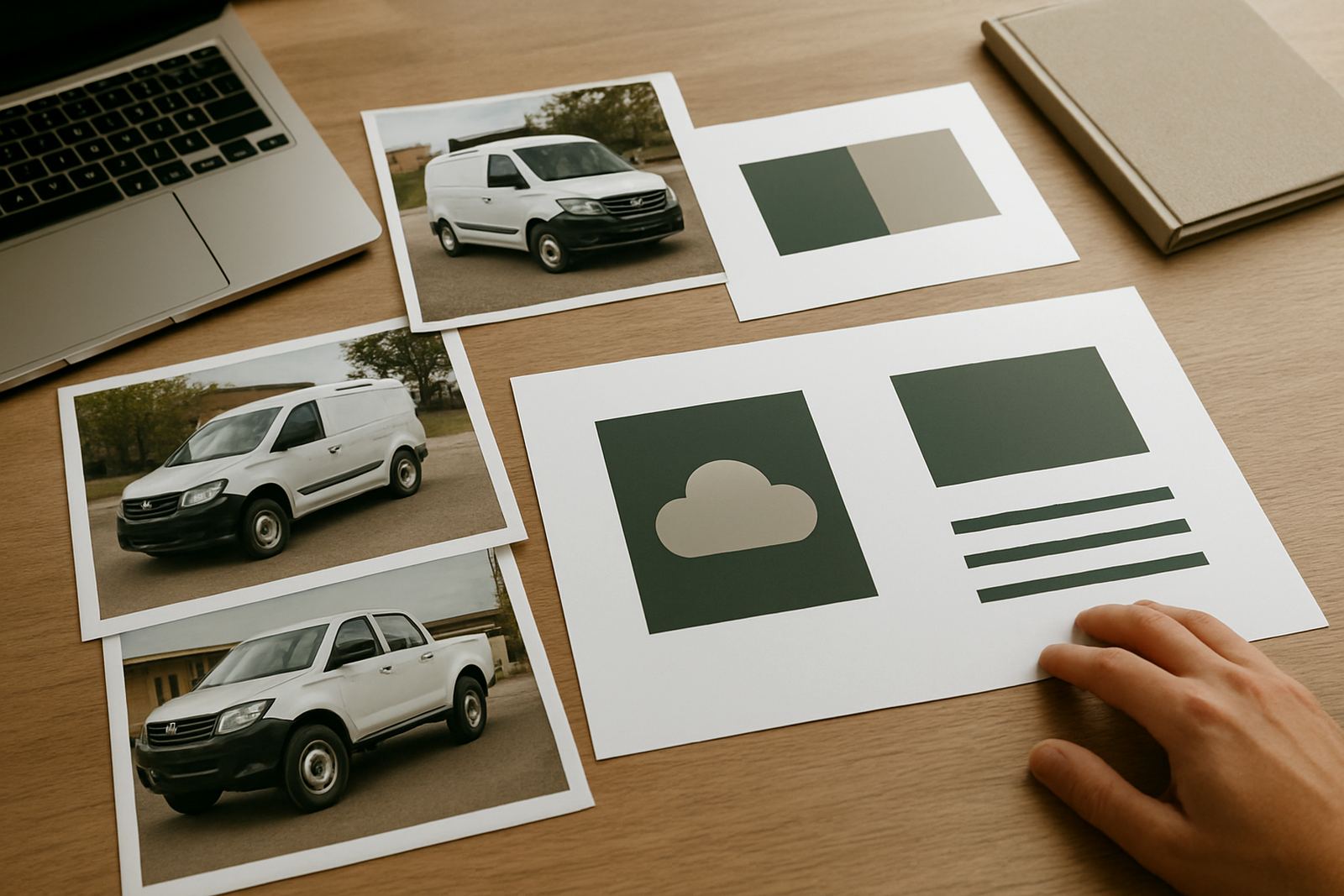
For a Boksburg business with vehicles moving across Ekurhuleni, a sensible workflow is simple: measure the vehicles, confirm the branding layout, approve the artwork and then schedule fitment. This avoids last minute changes and helps keep downtime low. It also makes it easier to update one vehicle later if a new van is added to the fleet.
If you run a service business, it is worth keeping a master set of artwork on file. When a bakkie is repaired after an accident or a door is replaced, the replacement graphics can match the rest of the fleet exactly. That consistency is what makes a smaller fleet look more established than it really is.
A Boksburg example: one small fleet, one clear image
Picture a local company with four service vehicles: two bakkies, one panel van and one hatchback used for sales calls. If each vehicle gets a different version of the logo, the business looks mixed up. But if the same colour band, logo position and lettering style are repeated across all four, the fleet feels planned. That kind of presentation gives a better first impression when the team arrives at a site in Alberton, Springs or Edenvale.
We see this often with firms that start small and grow over time. The owner may brand the first vehicle, then add one more later, and then another after a contract comes in. Without a fixed standard, the vehicles begin to drift apart visually. A simple fleet branding guide prevents that. It does not have to be a thick file, just a clear record of the colours, sizes, placements and wording to use every time.
That small bit of discipline pays off. A neat fleet is easier to identify in traffic, easier to trust on arrival and easier to expand when the business grows. It is one of the most practical marketing tools a local company can invest in, and it works every day without asking for much more than proper care and a tidy finish.