Start With the Journey Your Visitor Takes
Before any board is made, map the actual journey. Where does the driver enter, where do pedestrians walk, and where do they need to stop? On a factory yard in Boksburg or a medical park in Germiston, the route often starts at the gate and ends at reception, a loading bay or a specific unit number.
We look at the site layout, vehicle turning points, security points and any places where people naturally pause. If the route is long or there are several decision points, directional signs need to work as a set not as single boards scattered around the property.
- Identify every turn, fork and entrance.
- Mark visitor, staff and delivery routes separately if needed.
- Check where people will first see the sign from a moving vehicle.
Choose the Right Message for Each Sign
Directional signs are not there to say everything at once. Each sign should carry one job, such as left arrow, straight ahead, reception, deliveries, parking or security. The message must be brief enough to read in a few seconds from the correct distance.
For sites in Kempton Park, Alberton or Edenvale, we often recommend a simple naming system that matches the building labels and unit numbers already in use. If your estate agent boards, site boards and internal wayfinding all speak the same language, visitors make fewer mistakes and staff spend less time redirecting them.
- Use short wording and clear arrows.
- Keep naming consistent across the whole site.
- Do not overload one board with too many destinations.
Mounting Height, Viewing Angle and Clearance Matter
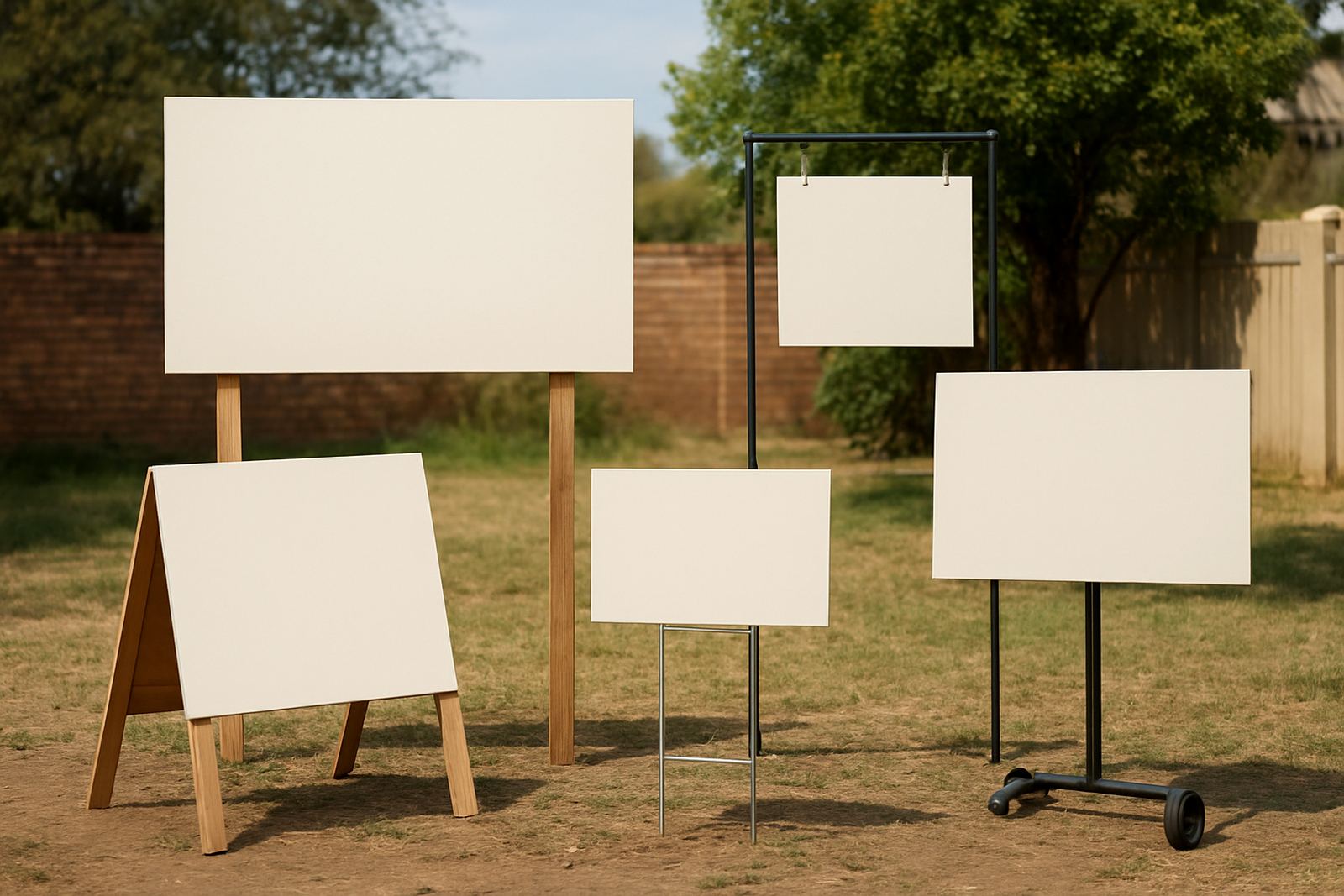
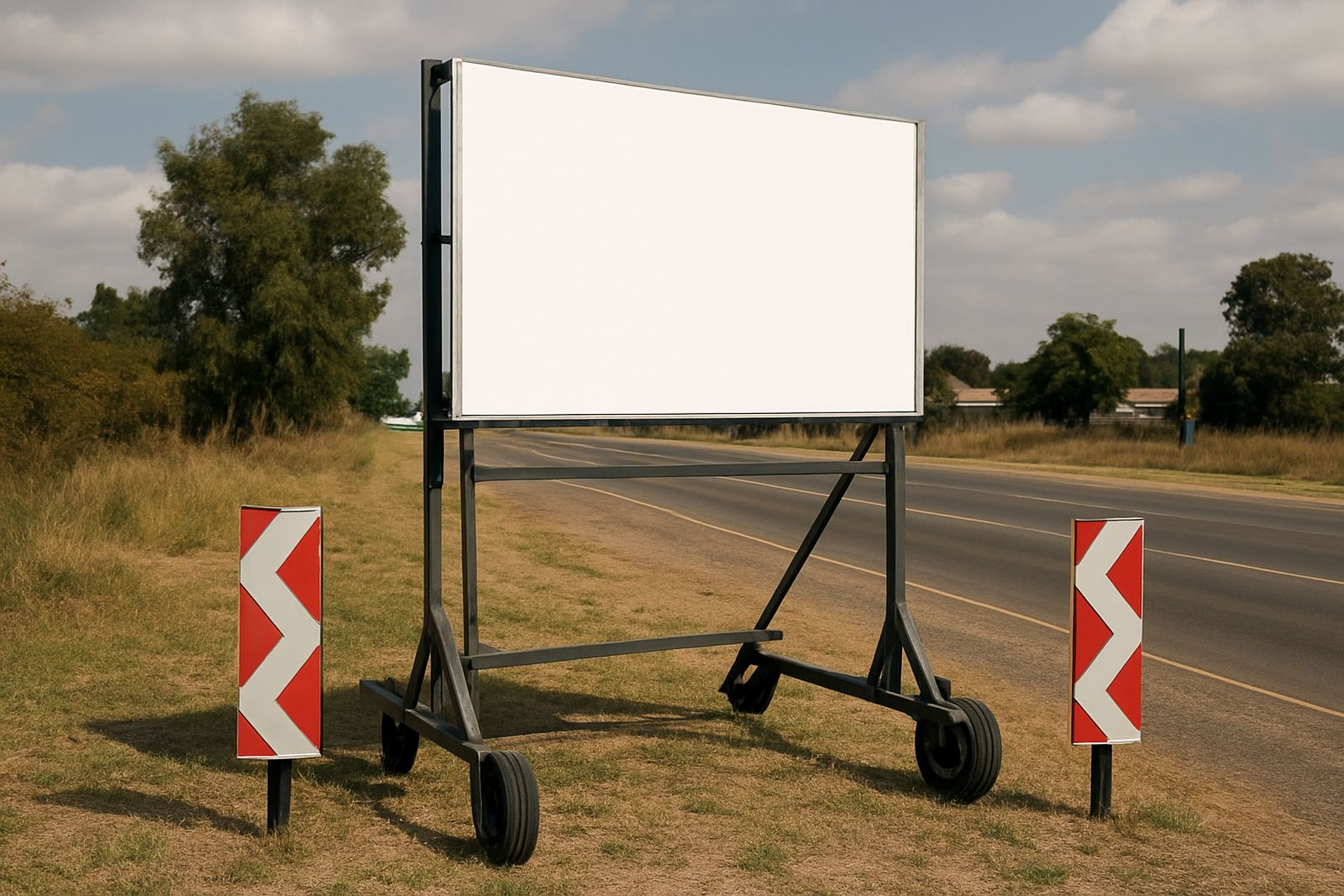
A sign can have the right wording and still fail if it is mounted too high, too low or behind a parked vehicle. Directional systems work best when the mounting height is planned with the viewing angle and approach speed in mind. On truck routes and yard entrances, the sign must stay clear of branches, gates and moving loads.
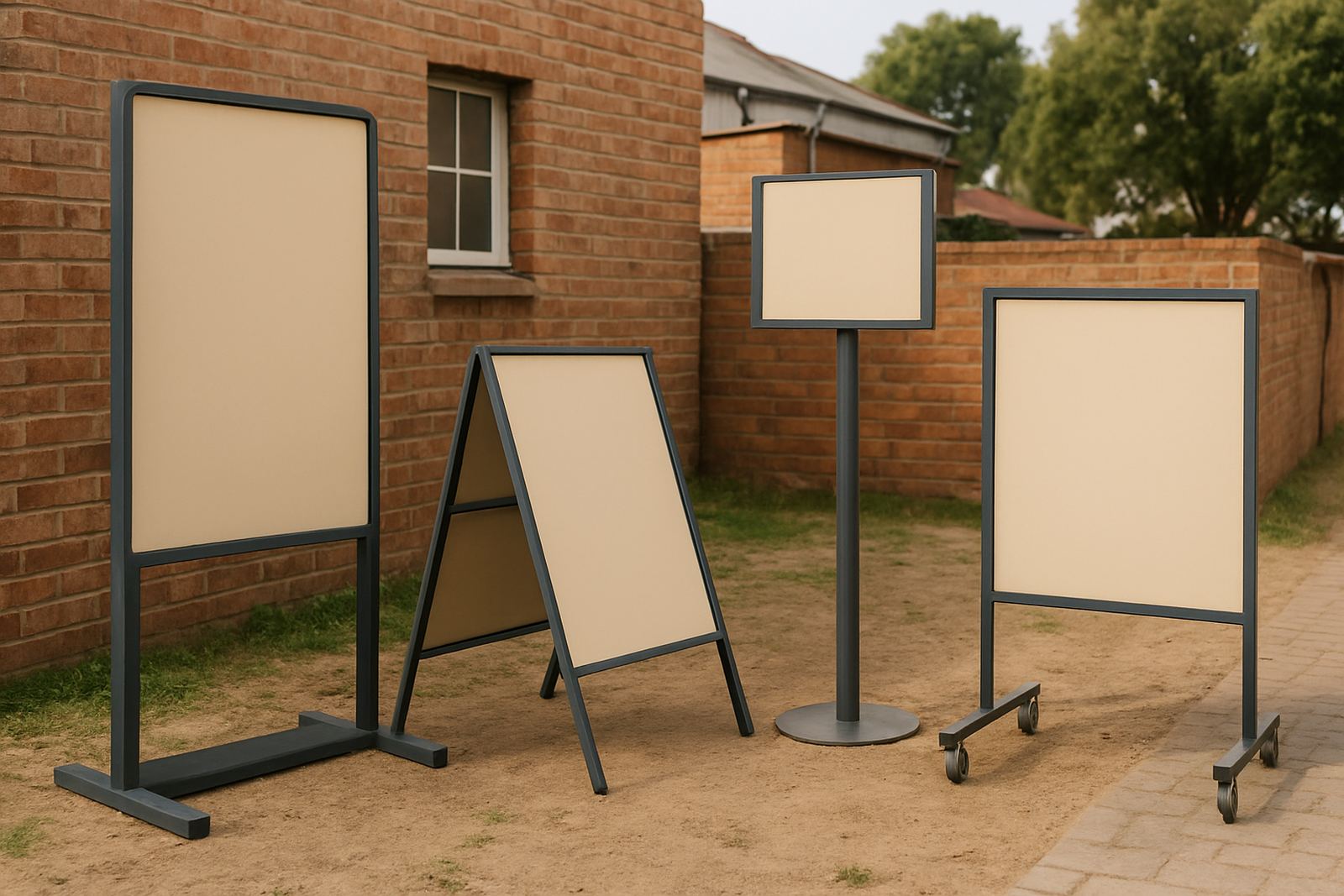
In some cases, wall mounting is best. In others, posts or poles give better visibility above cars and deliveries. We also consider local conditions such as coastal humidity on the wider Gauteng supply route, dust, and the extra strain that load-shedding can place on illuminated areas and access points.
- Keep signs high enough to avoid blocking by vehicles.
- Allow for safe clearance near gates and walkways.
- Check that the sign can be read at the approach speed of the road.
Pick Materials That Suit the Site and Weather
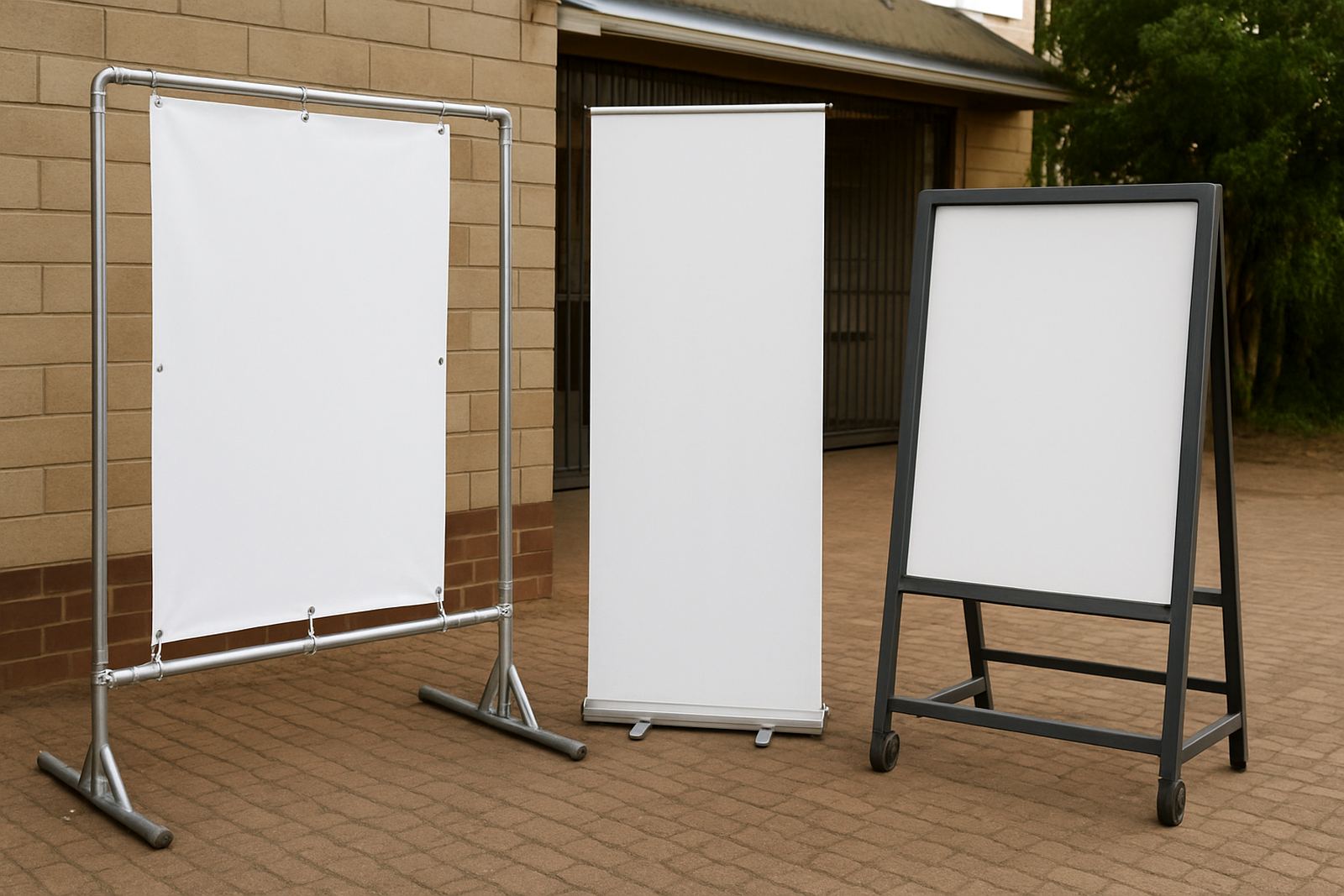
Directional signs are often outdoors, so the material choice should suit sun, rain, dust and regular cleaning. For a clean professional finish, we use materials that hold up well on office parks, industrial sites and retail entrances. If the sign will be near road traffic or in an area with plenty of dust, the face must be easy to wipe down and the fixing points must be secure.
Cut vinyl lettering works well for simple directions on flat panels. For larger systems, printed or painted panels may be used where the route names need stronger visibility. On exposed sites around Springs or Midrand, we also think about wind loading and how the board will age over time.
- Choose a finish that is easy to clean.
- Match the material to indoor or outdoor use.
- Allow for sun exposure and weather wear.
Make the Whole Set Read as One System
A direction board should not feel random. The font, arrow style, colours and sign sizes need to match across the site so the eye recognises the system immediately. That is especially important when a visitor follows several signs in a row, or when a delivery driver is trying to move quickly through a yard.
We also check how directional signs work with other boards already on site, such as name plates, safety signs, no entry signs and vehicle fitment markings. When the full set is planned together, the result is easier to follow and tidier to maintain.
- Use one clear style across the site.
- Keep arrow direction consistent.
- Coordinate with safety and identification signs.
From Site Survey to Final Fixing
Our process starts with a site survey and ends with the sign properly fitted where it is needed. We measure, confirm route names, check mounting points and then prepare the artwork setup before manufacture. If a sign needs board mounting, installation or later maintenance visits, we plan that into the job from the start.
Some clients in Boksburg and Benoni only need a few internal direction signs. Others need a full system for a plant, office park or commercial property with several entries. In both cases, clear planning saves time and avoids rework, which matters when access is busy and operations cannot stop for long.
- Confirm the route names before manufacture.
- Check fixing points and power or access needs.
- Plan for future updates if units or departments change.