What the Nigel plant needed on site
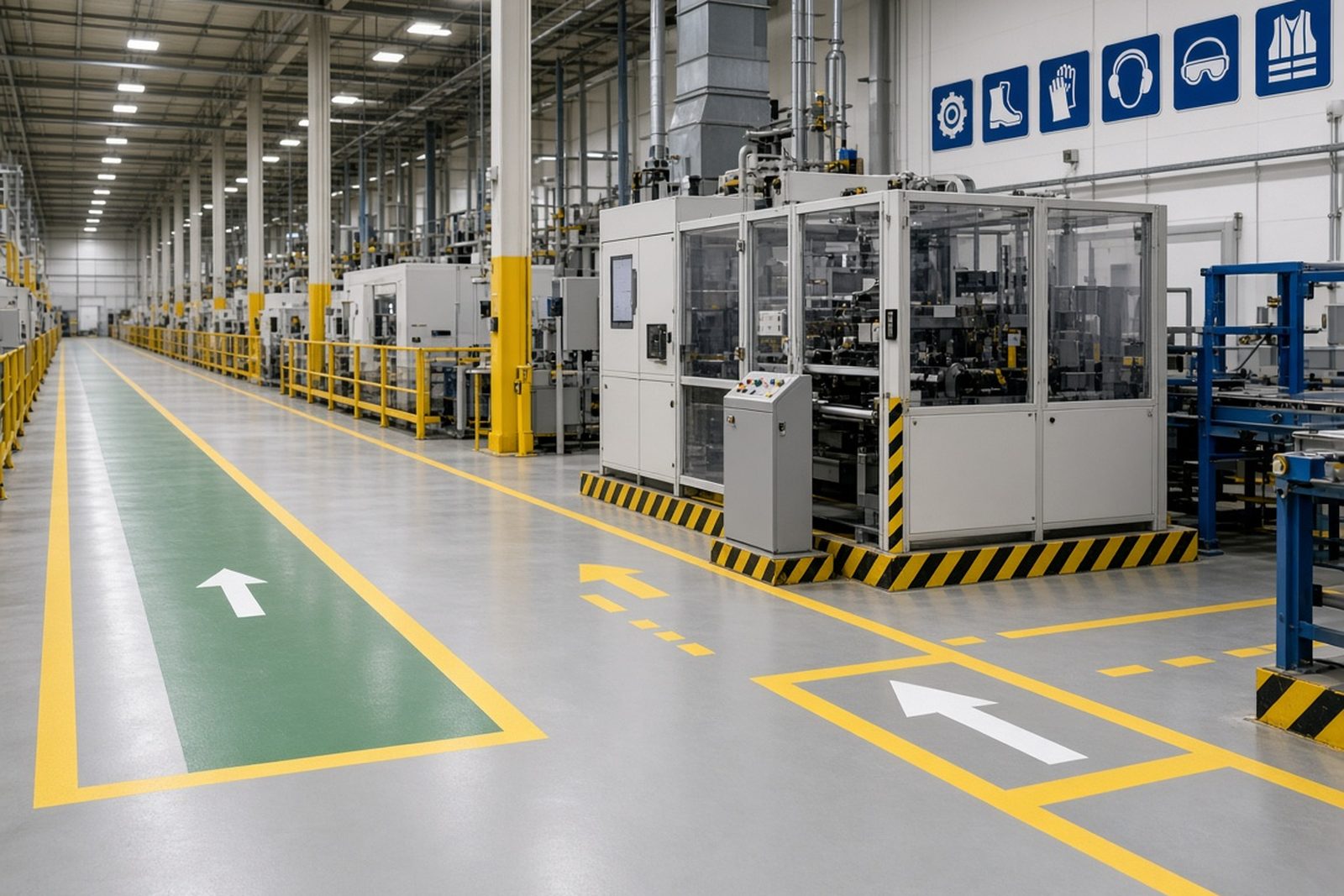
The client was an industrial manufacturing plant in Nigel, serving a busy production floor with changing teams, contractors and visitors moving through the site. Their main need was simple: every machine, zone and control point had to be marked clearly enough that staff could work safely without hunting for information.
The brief covered equipment labels, area signs, operating notices and a few warning boards for restricted sections. The plant wanted a tidy, consistent look across the site, with signs that would last longer than ordinary paper notices or thin stickers. We also had to work around ongoing production, so the job needed to be measured, planned and installed with minimal interruption.
Site checks, measurements and the working constraints
Before any making started, we carried out a site survey to check wall space, machine faces, mounting points and viewing distances. Some areas had limited access, a few surfaces were uneven, and parts of the plant were exposed to dust, oil mist and regular wipe-downs. In one section the lighting was low and we had to allow for visibility from a couple of metres back, not just up close.
The biggest constraint was keeping production moving. Certain zones could only be entered at set times, and some equipment could not be stopped for long. We planned the work in stages so the client could continue operating while we measured, cut and prepared the signage. In a plant like this, good timing matters almost as much as good material choice.
- Measured sign positions on live equipment and fixed wall areas
- Checked visibility from operator walkways and entry points
- Allowed for surface prep on painted steel, tiled and powder-coated areas
- Split the work into short access windows to reduce downtime
Materials and marking methods we supplied
For this project we used durable vinyl cutting for lettering and symbols, plus printed panels for the larger notices. The aim was clear legibility and long service life, not a temporary finish that would peel or fade after a few months. On high-touch items we used material suited to regular cleaning and the mild wear that comes from hands, gloves and trolley movement.
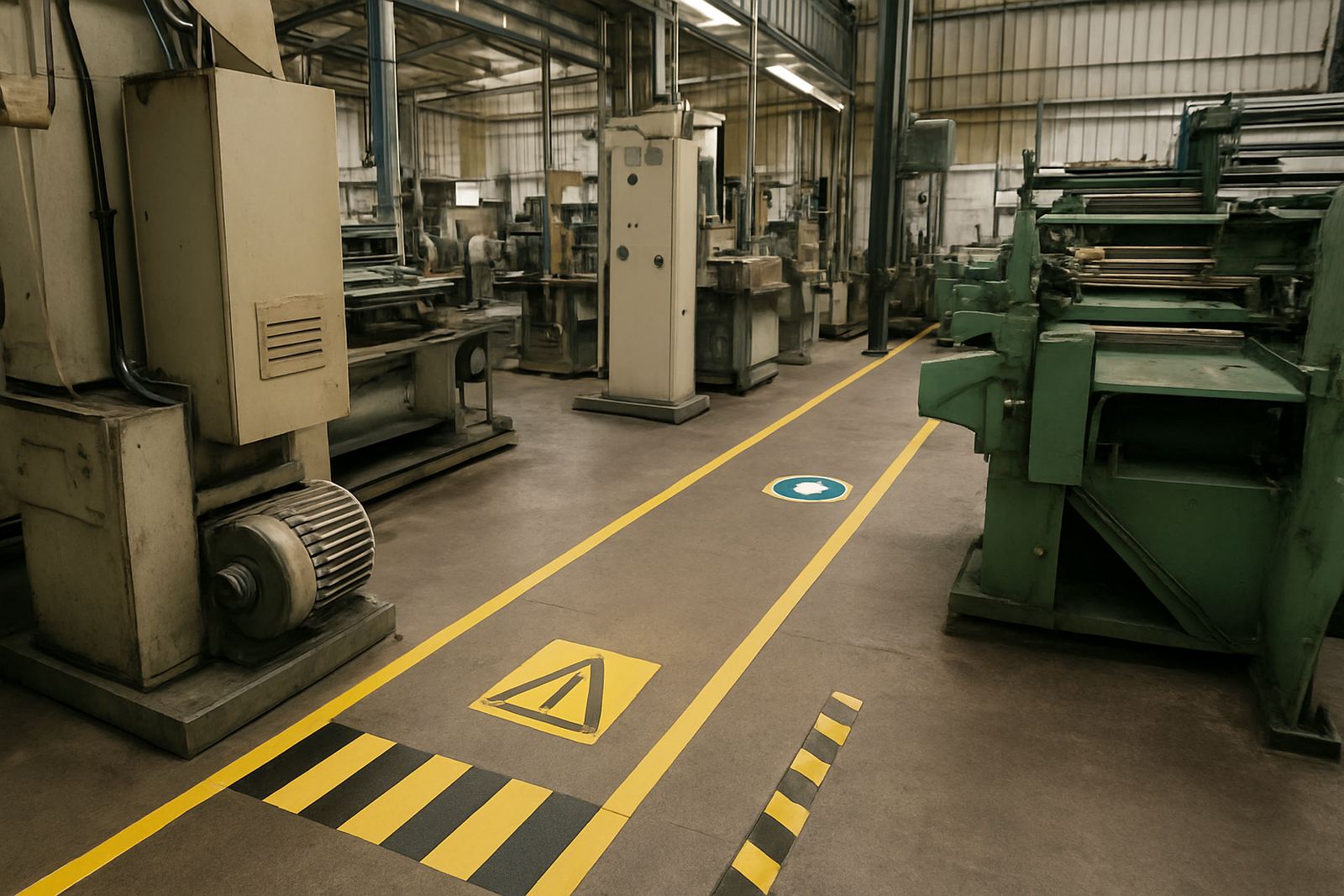
The equipment labels were kept compact and readable, while the area signs were made larger for quick recognition at a distance. Where the client needed warnings or operating steps, we laid them out in plain sequence so the wording could be followed fast. Colours were used to separate instruction, warning and identification. That part sounds small, but it helps a lot when people are working under pressure.
- Cut vinyl lettering for machine names, bay numbers and directional text
- Printed rigid boards for operating notices and safety messages
- Durable adhesive films for smooth metal and laminated surfaces
- High-contrast layouts for better reading in mixed light conditions
Manufacture and installation over two weeks
The job ran across two weeks from approval to final fitment. Week one was for confirmation of sizes, artwork setup and manufacture. Once the client had signed off the wording and layout, we cut the vinyl, printed the panels and prepared the fixing method for each location. Week two was for delivery and installation, with the team working through the plant in planned sections.
On site, our installation foreman and workshop team fitted the signs level and secure, with careful attention to alignment so the final result looked consistent across the whole facility. We mounted the larger boards where they could be seen from approach routes, and placed the smaller labels close to the relevant equipment. A few signs needed minor adjustment after the first fit, which is normal on a live industrial site, and it was sorted before we left.
Results the client could use straight away
Once the markings were in place, the plant had a much clearer layout for staff and visitors. Operators could identify equipment faster, restricted areas were easier to spot, and the operating notices were where people actually needed them. The client also had a neater and more consistent appearance across the site, which helps when auditors, contractors or new staff come through.
We were told the biggest improvement was speed. People no longer had to ask for the location of a specific bay or machine, and the printed notices held up well to cleaning and normal handling. In a working plant, that matters every day, not just on the day of install. It also cuts down on missed instructions and the small delays that add up over a shift.
- Clearer identification of machines, bays and access points
- Better visibility for safety and operating instructions
- Consistent signage across the plant instead of mixed old labels
- Less time spent asking for directions or checking procedures
What we would do again for a plant like this
If we were doing a similar Nigel plant marking job again, we would follow the same approach: site survey first, then sign schedule, then manufacture and staged installation. That sequence gives better control over sizes, fixes and wording, and it avoids mistakes that happen when people rush labels out before the plant layout has been checked properly. A few extra minutes on the front end saves a lot of rework later.
For industrial clients in Ekurhuleni and greater Gauteng, we find this method works well because many sites have live operations, mixed lighting and surfaces that are not all the same. The practical answer is usually the best one. Measure accurately, choose the right material for the surface, and install it where staff can see it without stepping into danger zones. That is what gives the signs value.
Executive Screen Printers handles industrial signage, fleet marking, site boards and printing work from our Boksburg base, with service across the East Rand and beyond. Clients reach us through the enquiry form on our contact page when they need markings that are clear, durable and fitted properly.
Key facts
| Client type | Industrial manufacturing plant |
|---|---|
| Project location | Nigel, Gauteng |
| Scope | Equipment labels, area signs and operating notices |
| Timeline | 2 weeks from approval to final installation |
| Materials | Cut vinyl lettering and printed rigid panels |
| Access constraints | Live production areas, limited shut-down windows and mixed surface types |