
What a partial wrap is, and when it makes sense
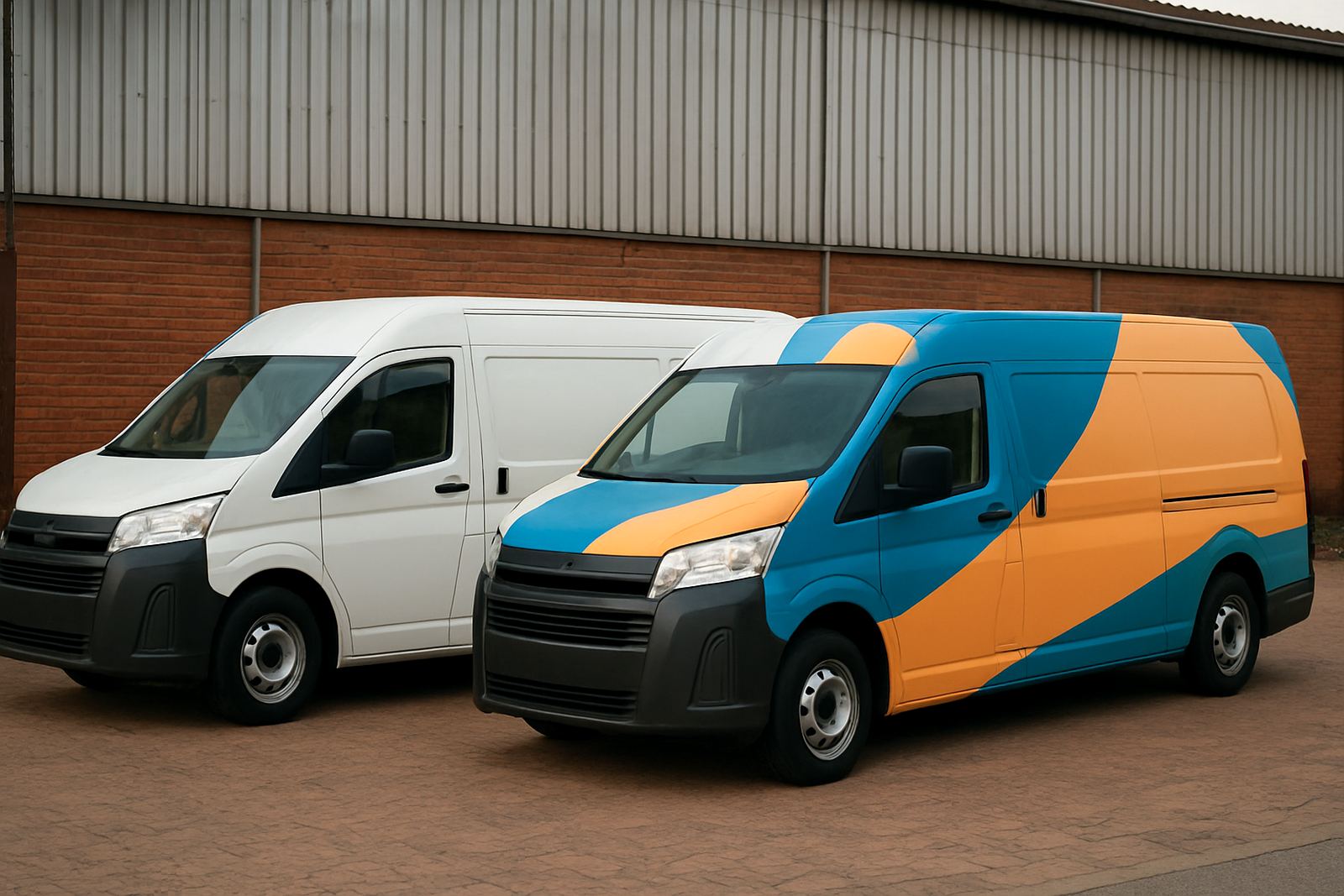
A partial wrap covers selected areas of a vehicle, usually the doors, rear panels, bonnet strips, roof sections, or tailgate, while leaving the original paint visible. It is a practical option for panel vans, bakkies, delivery vehicles and sales fleets that need clear branding without covering every inch of bodywork.
For a lot of local fleets, this is the sweet spot. You still get your company name, contact details, service message and logo in the right places, but you are not paying to wrap large areas that do not add much value. On the East Rand, where vehicles spend long hours in traffic and on the N17, that kind of targeted visibility can work very well.
- Good for tight budgets that still need professional branding
- Ideal when the vehicle colour already suits the brand
- Useful for short term fleet sign-ups or phased rollouts
- Quicker to fit, which helps when vehicles must stay on the road
Why full wraps are chosen by some fleets
A full wrap covers nearly all visible painted surfaces, giving a uniform look from every angle. It suits businesses that want the vehicle to act like a moving billboard, especially where the brand needs to be seen from a distance or the vehicle itself is a key part of the marketing effort.
Full wraps also help when the base vehicle colour clashes with the brand palette, or when there are older paint marks, fading, or mismatched panel repairs. In that case, wrapping the lot can be cleaner than trying to work around the existing finish. For companies operating across Germiston, Kempton Park and Midrand, full coverage can give the same look across mixed vehicle types, which is handy for brand consistency.
- Stronger coverage for large graphics and bold colour blocks
- Better for older vehicles with patchy paint or visible repairs
- Useful when the brand relies on high-impact visual recognition
- Can create a more uniform fleet appearance across different models
How to compare cost, downtime and daily use
The price difference between partial and full wraps is often the first thing people ask about, and rightly so. A partial wrap usually uses less material and less labour, which brings the cost down. It also tends to mean less vehicle downtime, since fewer panels need prep and fitting. But the better question is not only what it costs today, rather what it does for the business over the next few years.
A delivery bakkie that spends every day in customer suburbs may not need a full wrap if the brand mark on the doors and rear panels is already doing the job. On the other hand, a single sales vehicle that meets clients at site every day may benefit from the extra presence of a full wrap. We often advise customers to think about actual routes, parking, and how long the vehicle is visible at stops and loading points.
- Partial wraps usually cost less and fit faster
- Full wraps give more coverage but take longer to prepare
- High mileage vehicles need durable materials and proper fitting either way
- Vehicles parked outside in the sun should be planned for colour fade and cleaning access
Using the vehicle shape to your advantage
The best wrap choice depends on the shape of the vehicle and where people will see it. A panel van gives broad side areas that suit logos, text and service panels. A bakkie can carry branding on the doors, tailgate and canopy sides without needing full coverage. A compact car may do better with a partial wrap that focuses on the doors and rear quarter panels, where traffic sits most of the time.
For fleet owners, the aim is simple: use the areas people notice first. Rear view traffic in Boksburg or stop-start movement near East Rand Mall often gives you only a few seconds of attention. That means rear doors, tailgates and side panels carry more value than decorative coverage on hidden sections. Good layout makes more difference than simply covering more surface area.
- Doors and rear panels are often the most visible spaces in traffic
- Tailgates work well for phone numbers, web details and service lines
- Large vans can carry stronger graphics on wider panel areas
- Smaller vehicles benefit from simple, readable artwork with less clutter
A local example from Boksburg to Benoni
Consider a plumbing and maintenance fleet based in Boksburg with vehicles moving daily through Benoni, Germiston and Alberton. The company wants its name visible, but does not need every panel wrapped. In that case, a partial wrap on the doors, rear panels and tailgate can give enough presence for roadside recognition and estate access control, while keeping the cost manageable.
If those vehicles are white and already in good condition, the partial route may be the better choice. The fleet still looks neat and professional when it arrives at a gate or municipal site, and the brand can be read clearly from behind in traffic. For a business that plans to add more vehicles later, this approach also makes it easier to roll out branding in stages without a large once-off spend.
That is the kind of practical decision many local businesses make. It is not about choosing the bigger option, it is about choosing the one that fits the work.
What to check before you sign off the job
Before approving a partial or full wrap, check the vehicle condition, the daily route, and the type of use. A wrap should suit the business, the paintwork, and the local climate. In Gauteng, sun exposure is a major factor, while on the coast humidity becomes a bigger concern. If a vehicle is washed often or used on site, the finish and edge sealing need to be done properly.
It also helps to think about removal later. Fleets change, contact details change, and municipal rules may affect some types of roadside advertising or site access. A well planned wrap should be easy to maintain and remove when needed, without leaving a mess on the bodywork.
- Confirm the vehicle paint is sound before fitting
- Choose the wording that matters most in traffic and at a distance
- Keep enough contrast for easy reading in daylight and at night
- Plan for cleaning, parking, and eventual removal or updates
The practical rule of thumb for most fleets
If you want maximum visual impact and the budget allows it, a full wrap is the broadest option. If you want strong branding, sensible cost and less downtime, a partial wrap often gives the better return. For many South African fleets, especially those based in Boksburg and working across Ekurhuleni, the partial option is not a compromise, it is simply the smarter fit.
At Executive Screen Printers, we help customers weigh up the vehicle, the routes and the message before anything is cut or fitted. That way the final result is not just eye-catching, it is practical for the daily grind, which is what matters when a vehicle has to earn its keep.