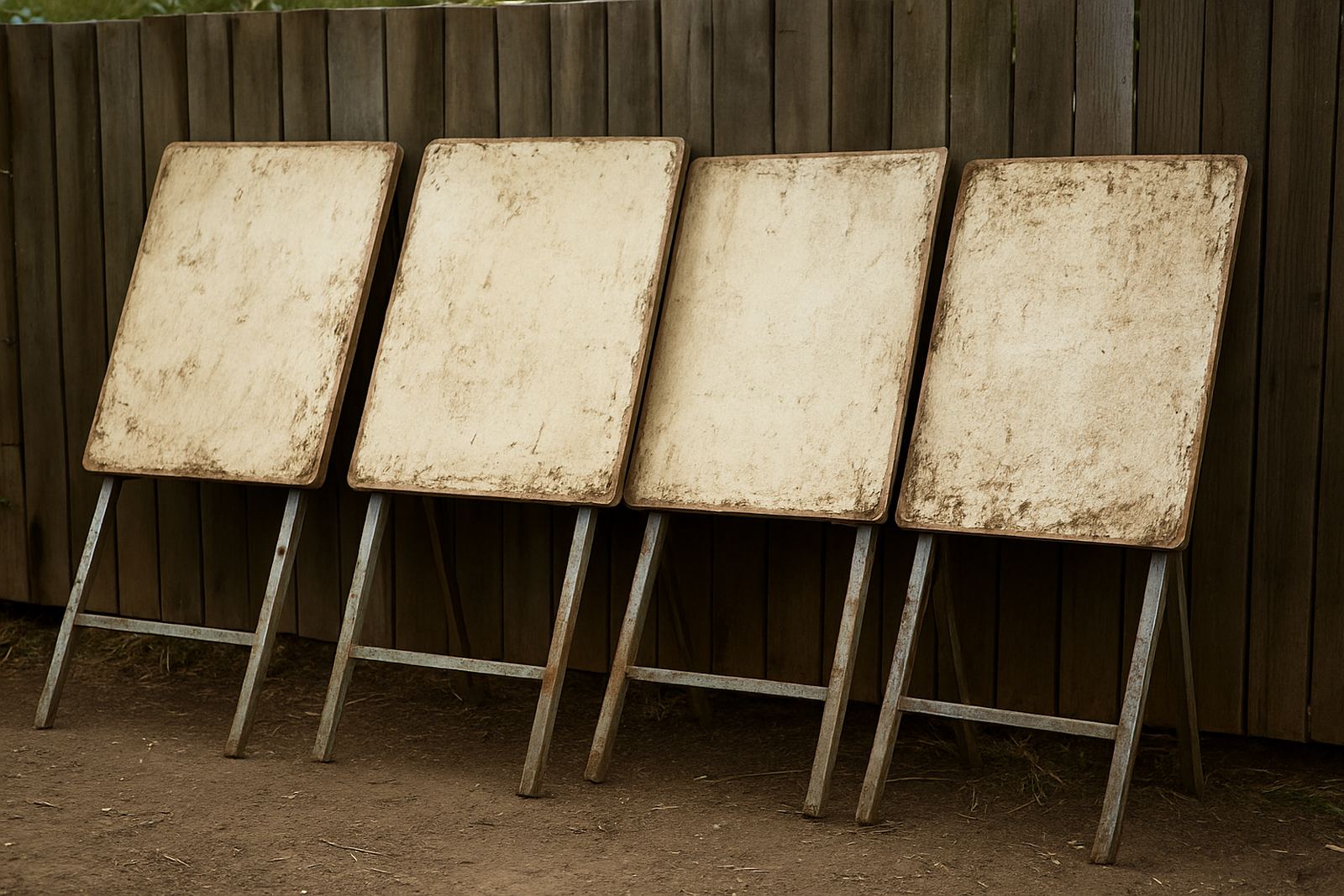
What actually decides how long a property board lasts
Board life is not only about the face material. It also depends on where the board is fixed, how it is mounted, the size of the board, and whether it faces direct sun, rain or vehicle spray. A board in a shaded estate entrance will usually outlast one on a windy corner stand in Boksburg or along a busy road in Germiston.
For property boards, the first failure points are often not the printed face but the edges, fasteners and mounting points. If the board flexes too much, the ink or laminate starts to crack near the fixings. If it sits in standing water, the substrate can swell and bow. If it is handled roughly during delivery or installation, the board can pick up dents, scratches or hairline cracks before it ever goes up.
Good life expectancy starts with the right brief. A board meant to stand for three months does not need the same build as one that must survive a year or more outdoors. That sounds obvious, but many replacements come from using a light temporary board for a job that really needed a heavier one from the start.
Choose the material for the time it must stand outside
Different materials suit different durations and conditions. In the East Rand, heat on the surface can be intense by mid morning, while afternoon storms test the edges and fixings. For that reason, material choice matters as much as print quality.
- Foamed PVC: useful for shorter runs and internal or sheltered outdoor use. It is light, neat and easy to fit, but prolonged sun can take a toll.
- ACM or aluminium composite: better for longer outdoor exposure. It resists flexing well and holds up better in wind.
- Corrugated plastic: suitable for temporary estate agent or site notices where the board may only be needed for a few weeks or months.
- Aluminium or steel frame-backed panels: a stronger option for boards that must stay up longer and cope with bigger wind loads.
If the property board is going to be moved from site to site, think about the handling too. Some materials are light but fragile, while others are heavier but tolerate transport better. A board that is cheap to buy but keeps cracking during fitment is not really cheap at all.
Printing, lamination and edge protection make a big difference
The print method affects how long the message stays clear. Sun fading is common on property boards that face north or west in Gauteng. Good colour hold helps, but the surface finish matters just as much. A clear protective layer can slow fading and reduce scuffing from dust, minor knocks and cleaning.
Edge sealing is often overlooked. Moisture usually gets in through the sides before it gets in through the face. Once a board starts taking in water, the life span drops quickly. That is why careful cutting, neat edge finishing and correct mounting are worth paying for. A board can look fine from a distance and still start failing at the corners within a few months.
For sites where the board is likely to be handled often, such as rolling estates, building sites or marketing boards that get changed every few weeks, ask for a finish that can cope with repeated movement. The extra care at production stage often saves a replacement later.
- Use UV resistant print where the board is exposed to full sun.
- Ask for clean edge sealing on boards that may see rain.
- Choose a finish that suits the way the board will be cleaned.
- Keep artwork simple so the message stays readable as the board ages.
Wind, theft and rough handling are part of the real lifespan
In practice, many property boards fail because of the environment, not because the print faded. Wind can flex a large board until it splits at the fixings. Loose mounting can turn a sign into a rattle board, which damages it bit by bit. On open sites, boards also get bumped by vehicles, scaffold, tools and even security gates.
There is also the issue of removal. A board that has to be taken down after a campaign, then stored flat and reused later, needs to survive that cycle. If it is folded, dragged or stacked badly, the useful life drops each time. That is why handling instructions matter from day one.
Simple steps can add months to the life of a board:
- Use the right bracket or frame for the board size.
- Allow for wind if the board is mounted high or in an open space.
- Keep the board clear of sprinklers, puddles and soil splash.
- Remove and store the board carefully if it is meant for reuse.
A local example from a Boksburg property board job
We often see the difference between a short term and a long term board on property and site work across Ekurhuleni. For example, a small estate agent board fixed on a sheltered boundary in Benoni may stay presentable for a long stretch if it is handled well. By contrast, a larger board on an open site in Boksburg, near traffic and afternoon wind, may need firmer mounting and a stronger panel to last the same period.
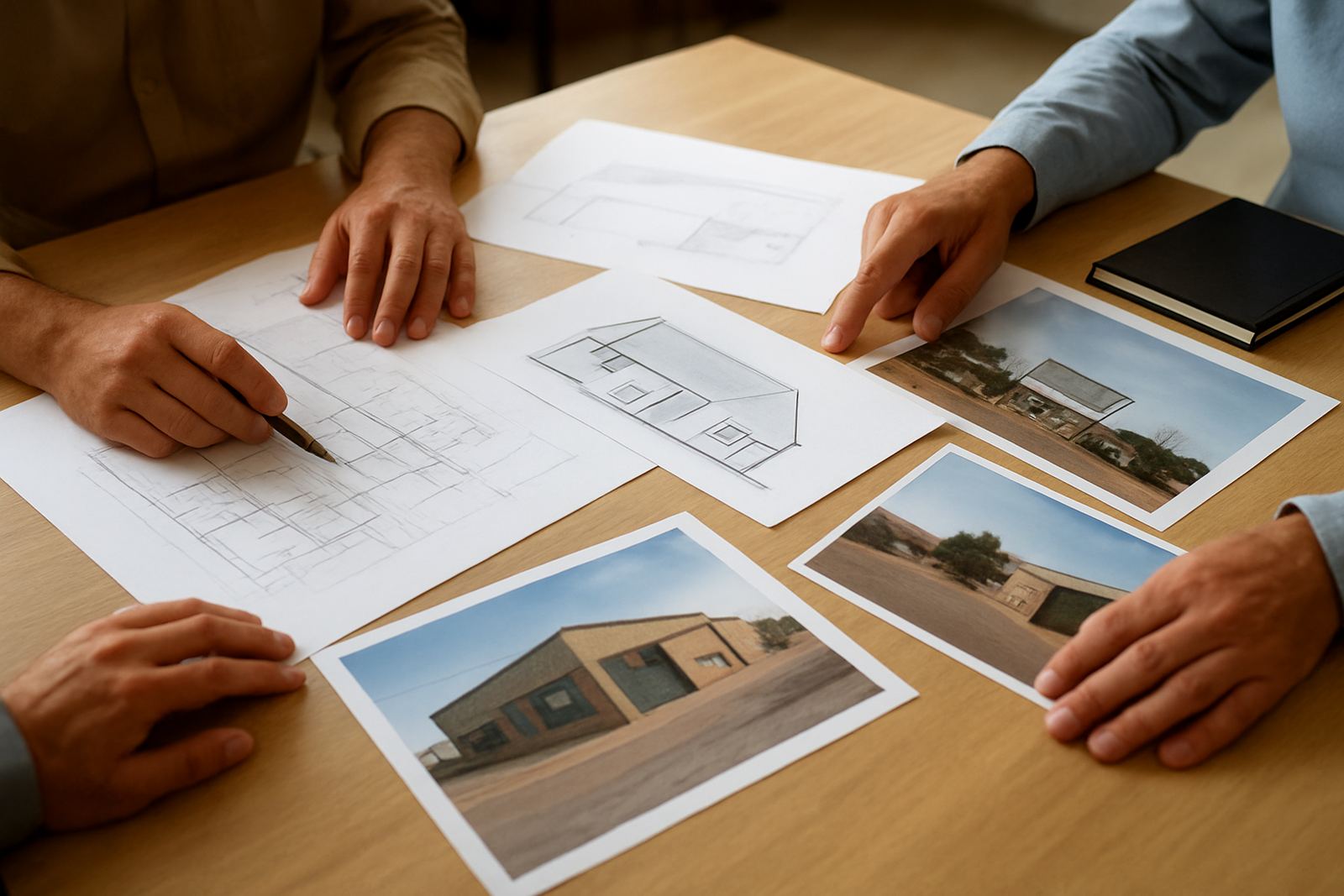
That is where practical site advice helps. During a site survey, we look at the fixing surface, the direction the board faces, the likely weather exposure and the size of the message. We also check whether the client wants the board to be reusable or only needed once. A board for a development launch in Kempton Park will not be built the same way as a directional notice for a monthly security change at a complex in Alberton.
When the brief is clear, the board lasts longer and looks better for longer too. The aim is not just to make a sign, but to make one that still reads properly when the delivery truck has gone and the weather has had a go at it.
When to repair, when to replace, and when to refurbish
Not every tired board needs a full remake. Sometimes a proper clean, fresh vinyl lettering or a partial re-skin is enough. If the board panel is still sound and the frame is straight, refurbishment can extend life at lower cost. This is useful for recurring property listings, school notices, estate entrances and contractor boards that change often.
Replacement makes more sense when the board has bowed, delaminated, rusted, or lost its fixing strength. Once the base structure is failing, patching it only buys a little time. In those cases, a fresh board with better materials and stronger mounting is the cleaner option.
A simple rule helps: if the message is the only thing that needs changing, refurbish; if the board itself is failing, replace it. That keeps the sign neat and avoids the false economy of trying to rescue something that has already reached the end of its proper run.