
Why window hours lettering matters for walk-in trade
For a shopfront, salon, agency, workshop or office, the trading hours on the glass do more than state opening times. They help a customer decide whether to come in now, later, or on another day. If the hours are missing, too small, faded, or stuck at a strange angle, people often assume the business is closed or not paying attention to small details.
In busy areas like Boksburg, Benoni and Germiston, people often make quick decisions from the pavement, the parking bay or the car window. That means the lettering needs to be simple, tidy and placed where it can be read without strain. It should also match the way the business works, whether the front door opens at 08:00, closes for lunch, or has different Saturday hours.
We have been making and fitting signage in the East Rand since 1988, and one thing stays the same: clear hours save time for staff and customers. They reduce repeated calls, unnecessary knocks on the glass and the awkward moment when someone arrives after closing because the sign was hard to read.
What makes hours lettering easy to read from outside
The best window hours lettering starts with legibility. A small, stylish layout might look neat in the artwork, but if it cannot be read from 3 to 5 metres away, it is not doing the job. Most businesses do better with a plain layout, strong contrast and a sensible font size. Black on frosted film, white on dark film, or a solid colour against clear glass can all work well, depending on the window and the light.
We also look at how the sun hits the glass. In Gauteng, strong daylight and reflective glass can make some finishes difficult to read during certain parts of the day. On a north-facing shopfront, for example, glare can wash out fine details. On a shaded entrance, a thinner font might be acceptable, but the hours still need enough spacing so that customers do not misread 08:00 as 08.30.
Good window hours lettering normally includes:
- Business name or logo if there is space, but never at the expense of clarity
- Trading days and times set out line by line
- Special notes such as lunch breaks, closed on public holidays, or by appointment only
- A neat finish that sits straight on the glass and does not bubble or lift
Choosing the right film for glass, tint and weather
Not every window takes the same type of lettering. Some glass is clear, some is tinted, and some shopfronts are exposed to dust, rain and strong afternoon heat. The right material depends on how permanent the hours need to be and whether the message may change later.
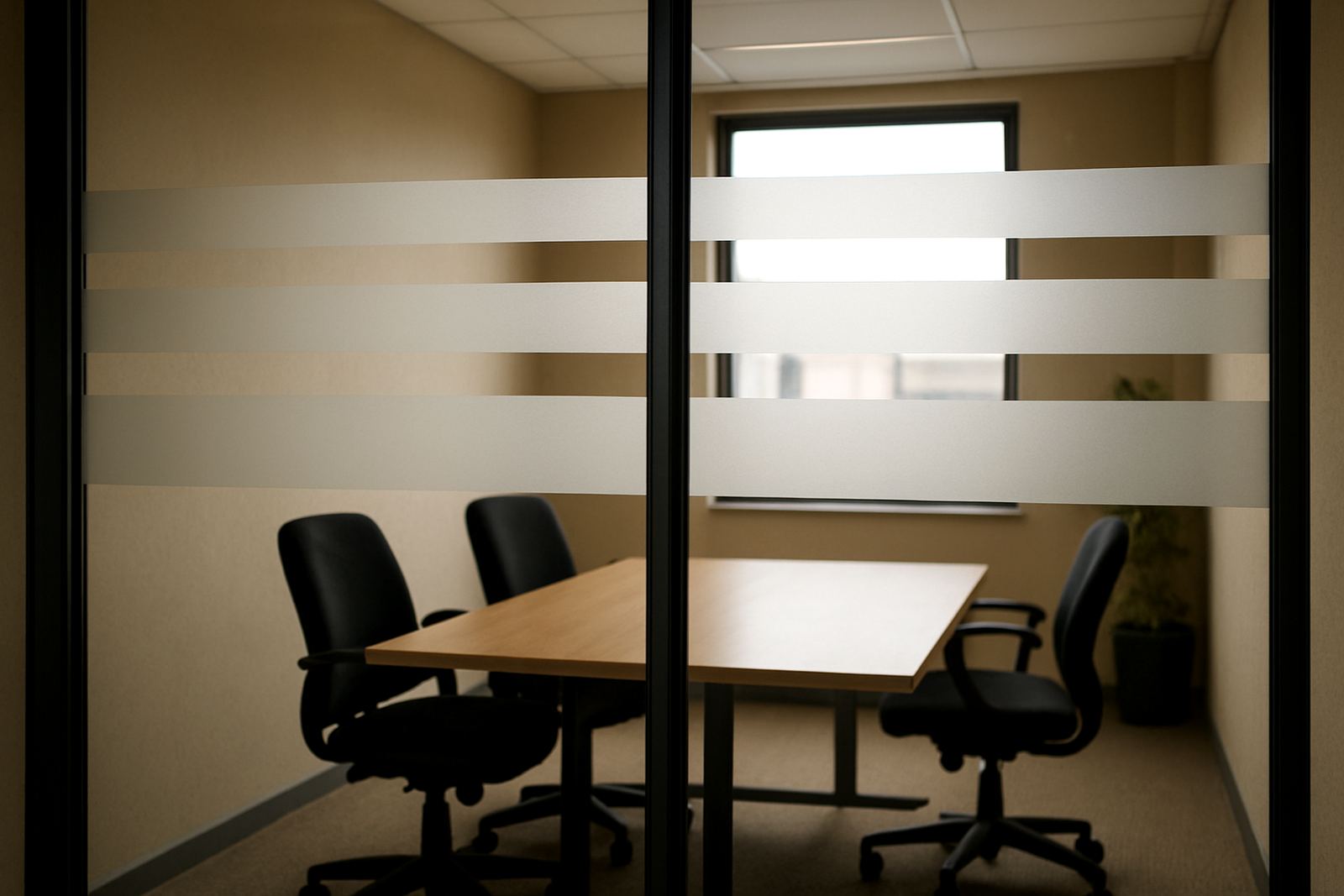
For a permanent set of trading hours, cut vinyl lettering is usually a practical choice. It sits neatly on the glass and gives a crisp edge. For a more subtle look, frosted film with applied letters can work well in reception areas, office fronts and medical rooms. If the hours need to be updated often, a removable layout may be better so that a new set can be fitted without damaging the window.
In coastal areas or places with high humidity, the finish and preparation matter even more. Dust, moisture and poor cleaning can shorten the life of the lettering. We prepare the glass properly before fitting, because a clean, dry surface helps the sign stay put through summer heat, winter rain and the daily wipe-down with window cleaner.
- Clear glass suits simple vinyl lettering with strong contrast
- Tinted glass may need lighter or bolder colour choices for visibility
- Frosted film helps if a business wants privacy as well as trading information
- Temporary hours can be fitted in a way that allows later removal or replacement
What to include so customers do not miss important details
Window hours are at their best when they answer the basic questions quickly. A customer should know when you open, when you close, and whether anything changes during the week. If the hours are only written once on the door and not updated after a seasonal change, people may still turn up at the wrong time. That is where a tidy, well planned layout helps.
It is also useful to think about what happens after normal trading hours. Some businesses want an after-hours number on the glass, while others prefer only the enquiry form details on the website and a clear instruction to use the front office during trading times. The aim is to keep the window uncluttered but useful. Too much text makes the sign harder to read, so it is better to keep only the key information on the glass.
Useful items for window hours lettering can include:
- Monday to Friday opening and closing times
- Saturday hours, if different from the week
- Sunday or public holiday notes
- Lunch break times where the door is closed
- Clear wording for appointment only or collection by arrangement
A practical local example from a Boksburg shopfront
Take a small business in Boksburg near a busy road where people drive past in the morning and again after work. The owner may have a front window, a glass door and a side panel facing the parking area. If the hours are only on the door handle side, half the foot traffic never sees them. A better plan is to place the main hours where they can be read from the pavement and from the car park, with the extra details kept small and neat.
For a customer in this kind of spot, we would usually check the window size, height from the ground, glare, and any existing branding already on the glass. Then the artwork is set out so the hours sit square and can be read before the person reaches the entrance. That saves time for the client, but it also gives the shopfront a cleaner appearance. It is a small change, yet it makes the business look organised and ready for trade.
This approach works just as well in Benoni, Kempton Park, Alberton and Edenvale, where offices and retail units often share space in busy centres. The same principle applies: make the important information obvious, keep the layout straight, and avoid wording that has to be explained later.
How we prepare, fit and maintain hours lettering
Window hours lettering starts with proper measuring. Our team can handle site surveys, artwork setup, sign manufacture and installation, so the finished piece fits the glass properly from the start. Lerato Mokoena manages the sales process, while Ayesha Patel sets up the artwork and Johan Pretorius oversees production. For fitting on site, Sibusiso Khumalo and the installation team make sure the lettering is aligned and secure, and Nokuthula Dlamini keeps client communication in order when a change is needed later.
Once fitted, the lettering should be checked from outside and inside. That includes the spacing, the height, the contrast and whether any reflections make the text hard to read. If a window is being used for other notices as well, it is better to separate the hours from temporary notices so the main message stays clear. Maintenance visits can also help if the glass is cleaned regularly or if a section needs replacement after removal work.
- Measure the glass before choosing the letter size
- Check the best viewing height for people standing outside
- Use simple wording that is easy to update later
- Keep the finish neat if the shopfront gets daily cleaning or direct sun
Getting started with a neat, current window sign
If your current trading hours are faded, crooked or missing altogether, it is worth replacing them with a cleaner set. Good hours lettering makes the front of the business easier to use and easier to trust. It also reduces confusion when staff change shifts, trading times shift for holidays, or the business takes a lunch break in the middle of the day.
At Executive Screen Printers in Boksburg, we make and install window hours lettering for businesses across Ekurhuleni and greater Gauteng. Clients get in touch through the enquiry form on our contact page, and we can help with delivery, fitting, maintenance or removal when the old film must come off first. It is a small sign, but it does a very important job every day.
When the hours are neat, current and easy to find, customers do not have to guess. They just read, decide and walk in.