
Keeping dispatch moving in a busy yard
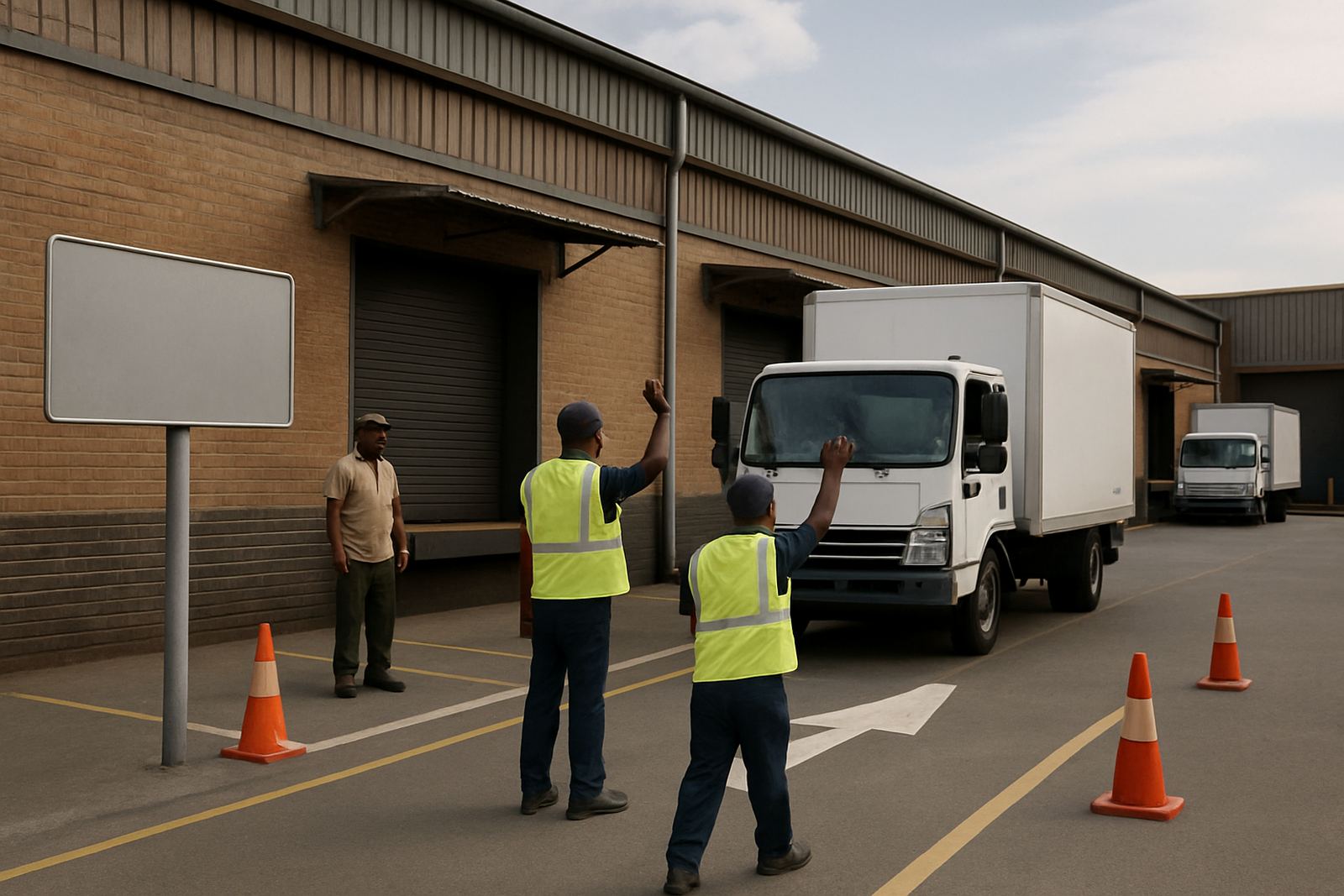
A logistics site has very little room for confusion. When trucks arrive early, staff are short-handed, or a driver needs to find the right bay quickly, the signs have to do the work without delay. We set out logistics signage for dispatch flow, bay numbering and driver movement control so the right people go to the right place first time.
For warehouses in Boksburg, Jet Park, Germiston, Benoni, Kempton Park and Midrand, the common problems are the same: vehicles turning in at the wrong point, foot traffic crossing forklift routes, and stacked pallets hiding bay numbers. Good signage sorts that out. It also helps during load-shedding, when lighting drops and people rely more on clear reflective marking and simple, high-contrast text.
Our team works with site managers, warehouse supervisors and transport coordinators to place signs where they will actually be seen, not just where there is an empty wall. Michael Johannes van der Merwe oversees the business, while our sales and production team handles the practical details from first site visit to final installation.
Typical signs for depots, yards and loading bays
The set-up depends on the site size, the number of vehicles moving through it, and whether the area is indoors, outdoors or both. A small distribution yard may only need a few bay numbers, direction arrows and warning signs. A larger depot may need a full numbering system, traffic control boards, entry and exit signs, and vehicle fitment for service bakkies and trucks.
- Bay numbering boards for loading and offloading points
- Direction signs for entry, exit, receiving and dispatch
- Safety signs for pedestrian routes, no entry zones and forklift areas
- Vehicle and trailer markings for fleet identification
- Site boards for contractor check-in, gate control and delivery instructions
- Reflective lettering and numbering for after-hours visibility
We also produce name plates, cut vinyl lettering and maintenance labels for racking, plant rooms, storerooms and control points. If a site has multiple tenants or different shifts, we can separate the information so each team sees only what they need. That reduces delays and cuts down on wrong turns at busy times.
Planning the layout before anything gets made
The best logistics signage starts with a site walk. We look at the road approach, gate positions, turning circles, bay access, pedestrian flow, and the places where a sign will be blocked by trucks, fencing or stacks of stock. A clean layout saves money later because it avoids remakes and repositioning.
For most logistics sites, the first question is not what sign to buy but where the decision points are. Where does a driver stop first? Where do forklifts cross? Which bay fills up quickest? Which route must remain clear for emergency access? Those answers shape the sign plan.
- Keep numbers large enough to read from a moving vehicle
- Use simple wording, one instruction per sign where possible
- Place key signs at eye level and before the turning point
- Allow for dust, rain, sunlight and regular cleaning
- Choose materials that hold up in coastal humidity, heat and daily wear
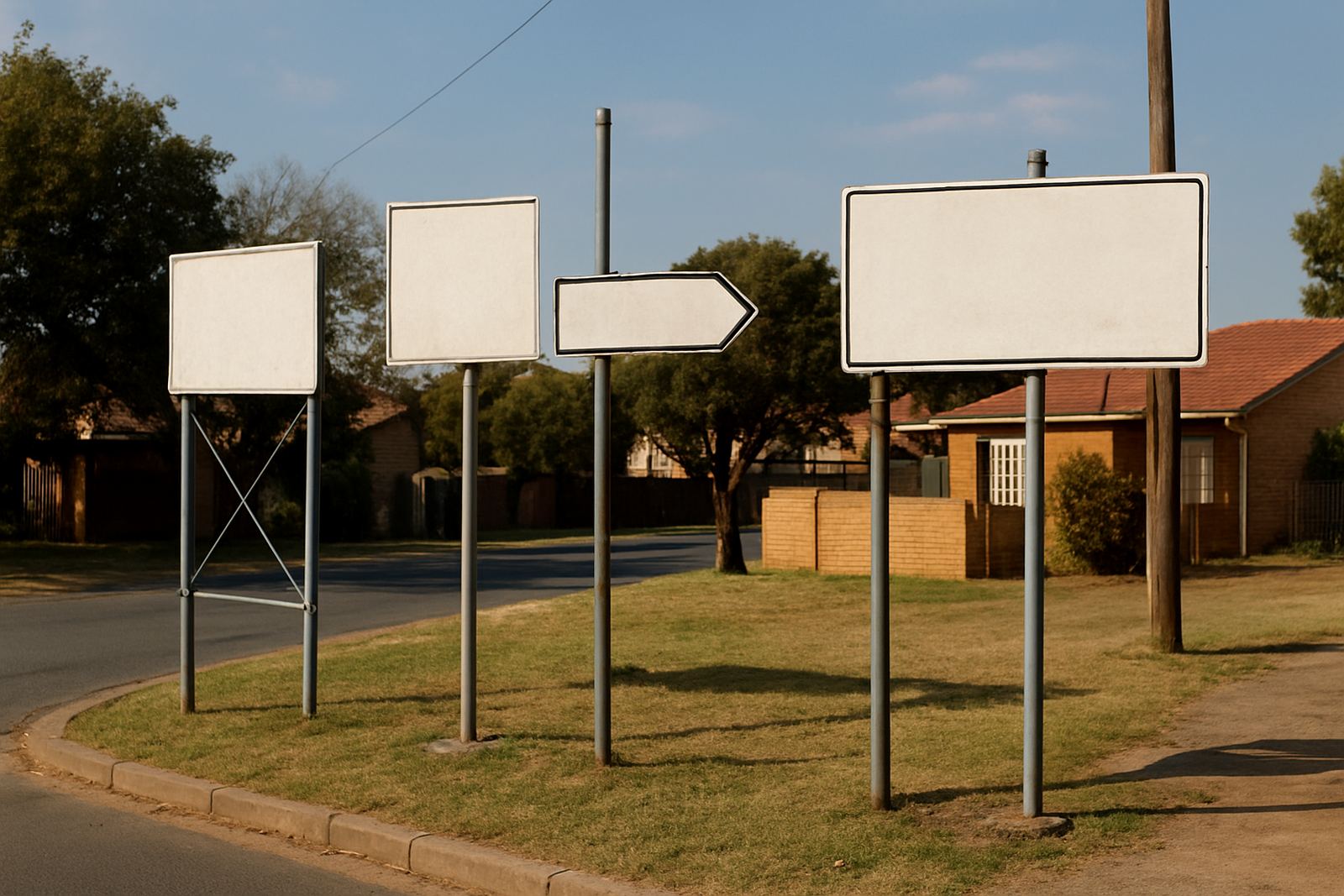
On industrial sites around Ekurhuleni, we often recommend a mix of flat wall signs, mounted boards, vinyl on gates and directional markers at ground or gantry level. If the site is busy at night, reflective vinyl or contrast panels can make a big difference without needing extra power.
Common mistakes that slow down operations
We see the same mistakes over and over on logistics sites. The first is too much text. Drivers and staff do not have time to read a paragraph while reversing a truck or crossing a yard. The second is poor placement. A sign hidden behind a roller door or mounted too high does not help anyone. The third is mismatched numbering, where bay numbers on the wall do not match the paperwork or the yard map. That causes confusion and arguments at the gate.
Another common issue is using indoor material outside. Sun, rain and dust will shorten the life of the board quickly. On sites with regular washing or chemical exposure, the wrong finish can lift, fade or stain. Maintenance matters too. A bent frame, cracked board or faded vinyl can undo the work of the original layout.
We offer maintenance visits, vinyl removal and refurbishment where a site needs an update rather than a full replacement. That is useful when a depot changes tenants, expands a warehouse, or adjusts its dispatch process. A small change in numbering can save a lot of time for the staff working there every day.
Materials and finish options that suit South African sites
For logistics signage, we use materials that stand up to hard use. That can mean aluminium composite boards, rigid plastic sheets, steel frames, cut vinyl lettering on smooth panels, or laminated printed graphics for indoor areas. The right choice depends on wind exposure, wall type, mounting height and how often the sign needs to be changed.
Outdoor sites in Boksburg and around Gauteng often need strong fixing points because wind and dust are constant. In busy yards, we usually suggest a finish that is easy to wipe down and does not glare too badly in direct sun. If the sign must face traffic at speed, bigger lettering and simpler colours are better than fancy details.
We also handle board mounting, delivery service and installation, so the sign arrives and goes up in one process. For fleet marking, we can fit vehicle graphics on site or in the workshop, depending on the vehicle type and how much downtime the client can allow.
Budget ranges for logistics signage in Rand
Budgets vary a lot, because one site may only need a few bay numbers and arrow boards, while another needs a full yard system with vehicle markings and safety panels. As a practical guide, simple printed or cut vinyl signs can start from about R350 to R900 each, depending on size and material. Medium outdoor boards and directional signs often fall between R900 and R2 500 each. Larger mounted boards, reflective signs or frame installations can run from R2 500 to R8 000 or more per item.
For a small warehouse or dispatch area, a basic signage package may sit in the R5 000 to R15 000 range. A larger logistics yard with multiple bays, gate boards, traffic control signs and fleet marking can move into the R20 000 to R80 000 range, depending on quantities and site access. If the work includes several branches or staged installation across Ekurhuleni and Gauteng, we can price it in phases so the budget stays manageable.
We are happy to quote from drawings, a photo set, or a site visit. The more information we have about bay counts, traffic flow and installation height, the tighter the price becomes. That saves time for everyone, and keeps the result practical.
How clients in Boksburg and Gauteng work with us
Most clients reach us through the enquiry form on our contact page. From there, Nokuthula Dlamini and Lerato Mokoena help with the first details, while Ayesha Patel and Johan Pretorius handle artwork and production planning. Sibusiso Khumalo oversees installation work on site, and Pieter Erasmus manages workshop output and finishing.
We supply logistics signage across Boksburg, Benoni, Germiston, Kempton Park, Alberton, Springs, Edenvale and Midrand, with regular work for depots, warehouses, transport yards and distribution points. If the site needs a fresh layout, we can combine site surveys, artwork setup, sign manufacture, sign installation and maintenance visits to keep the process simple. The aim is straightforward: clear signs, clear movement and less wasted time.