Why fixings matter more than most people think
When a sign comes loose, the problem is rarely the board alone. It is often the way the board was fixed to brick, concrete, steel, cladding or a pole, and whether the installer allowed for weight, vibration and weather exposure. Around Boksburg and the wider East Rand, we see a lot of mixed conditions, from older boundary walls to new warehouse facades and light industrial panels that take a fair bit of wind.
The fixing has to carry the sign safely for the long term. That means enough holding power for the panel weight, the right spacing between points, and materials that can cope with sun, rain and dust. If a sign sits above a pavement, driveway or loading area, the risk is not just damage to the panel, but to people and vehicles below it.
- Wall strength affects anchor choice
- Wind load affects spacing and bracket size
- Access affects how the sign can be installed and maintained
- Outdoor sites need corrosion resistance, especially near the coast or in damp storage yards
Matching fixings to brick, concrete, steel and cladding
Not every wall takes a screw in the same way. Brick walls can vary a lot, especially older boundary walls in residential and commercial areas where the mortar may be soft or uneven. Concrete gives a stronger base, but drilling depth and anchor type still matter. Steel frames need fixings that grip properly without crushing the material. Cladding panels are another story, because they often need load spread across a frame rather than a single point.
For a small name plate on a reception wall, simple concealed spacers or plugs may be enough. For a 2,4 metre directional board on a warehouse outside in Boksburg North, you may need masonry anchors into the structural wall or a support frame fixed to steel purlins. On some jobs the safe answer is not to fasten straight onto the finish surface at all, but to use a sub frame that carries the load.
- Brick: suitable plugs or chemical anchors, depending on condition
- Concrete: expansion anchors, sleeve anchors or chemical fixing
- Steel: self drilling or bolted fixings with proper washers
- Cladding: usually needs a load spreading frame or structural support
Weight, size and wind load change everything
A light indoor plaque and a large external board are not in the same category. Once a sign goes outside, wind becomes a real force. Even a panel that does not look heavy can act like a sail if it is tall or mounted off the wall. That is why sign fixings need to be chosen with the full size of the panel in mind, not just its mass in kilograms.
We always consider the mounting height, panel area and how exposed the site is. A board on a sheltered courtyard wall in Kempton Park will behave differently from one on an open corner in Springs or a roadside boundary near Alberton. If the board sits high or near a roof edge, there is usually more movement and more stress on each fixing point. That is where a proper bracket layout and the right spacing help prevent rattling, cracking and loosening over time.
For larger panels, maintenance access matters too. If the board can only be reached from a lift or ladder, the fixing plan should allow for safe future work, not just first installation.
Common fixing methods used on local sign work
The fixing method depends on the sign type. A cut vinyl logo on a shopfront window needs a completely different approach to an aluminium composite board on a steel frame. For fleet marking, the fixing is usually about adhesion and surface prep. For wall signs and site boards, mechanical fixing is more common, sometimes combined with adhesive where the surface and product allow it.
On East Rand industrial sites, we often see a mix of basic and specialised fixings. There is no single answer that suits every wall. A good installer looks at the base material, the sign backing and whether the area has dust, moisture or vibration from nearby traffic or machinery.
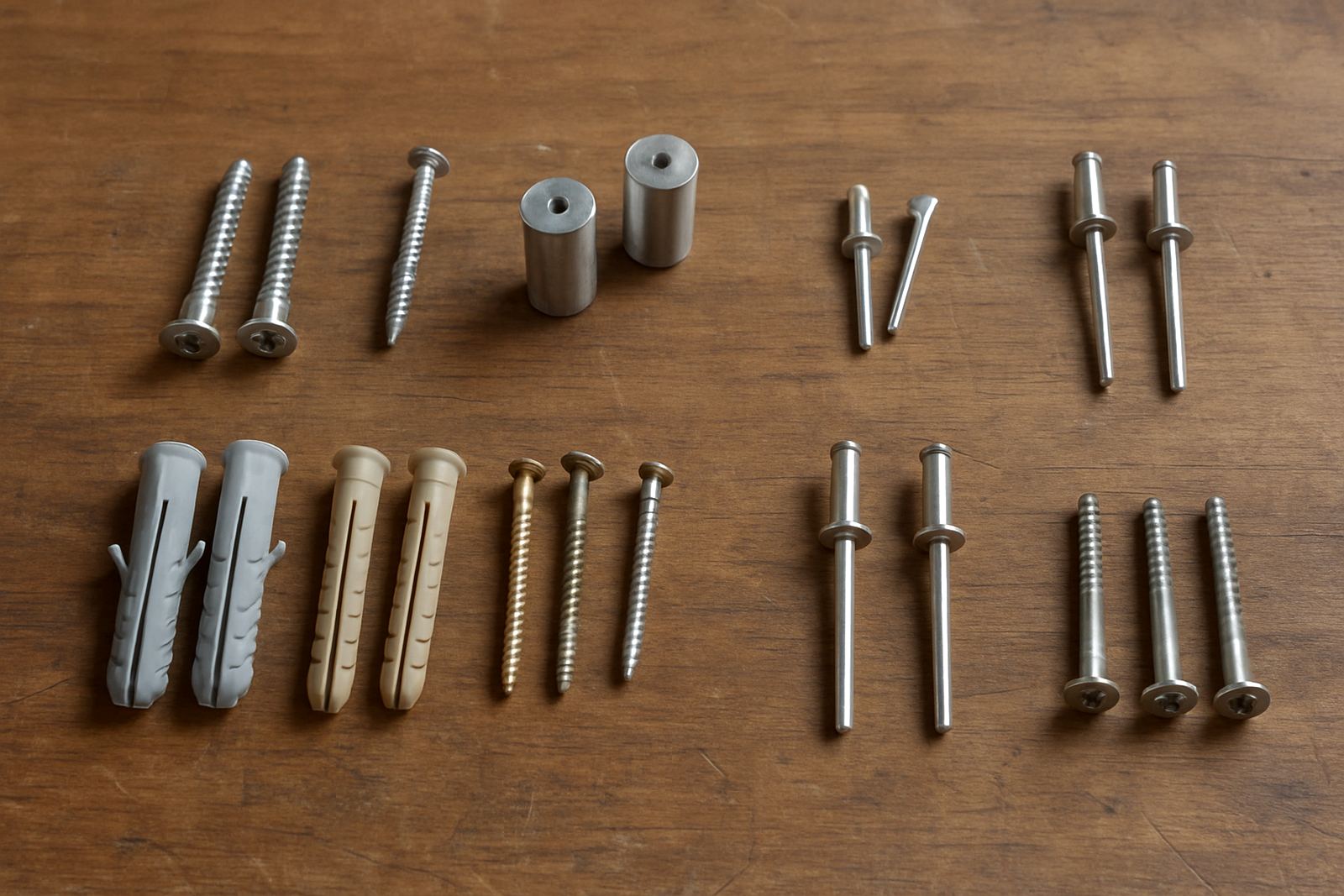
- Wall plugs and screws for smaller boards and light name plates
- Stainless bolts and washers for exposed outdoor applications
- Standoff spacers for neat projection and airflow behind panels
- Frames and angle iron supports for large boards or uneven walls
- Adhesive systems for smooth interior surfaces and selected fitments
Access, height and maintenance can affect the final choice
A sign is not finished once it is up. It may need cleaning, lamp changes if there is internal lighting, repainting, or replacement after years of sun exposure. If the site is difficult to reach, the fixings should make future maintenance possible without causing damage to the wall or sign face. That is especially important in busy industrial yards where trucks, forklifts and staff are moving all day.
In some cases the simplest route is not the safest route. A board mounted too tightly against a wall may trap moisture and make future removal difficult. A sign fixed with the wrong screws can be hard to service later, and the repair then costs more than the original job. Our approach is to think ahead, because a neat installation should still be practical in two or three years time.
- Can the sign be reached safely for cleaning or repairs?
- Will the fixing allow the panel to breathe where needed?
- Is there enough clearance for doors, roller shutters or vehicle movement?
- Will future removal leave the surface in a clean condition?
A Boksburg example: warehouse board on an exposed boundary wall
A recent local example was a large directional board for a warehouse close to a busy Boksburg industrial road. The wall was brick, but it was not a new wall and parts of the surface were uneven. The board was broad enough to catch wind, and the client needed it mounted high enough to be seen from the street. A simple plug and screw job would not have been the right call.
We surveyed the site, checked the wall condition, then set out a fixing layout that spread the load evenly. The board was mounted with proper spacing and corrosion resistant hardware, with care taken to keep the sign level and accessible for later maintenance. That is the point of good fixing work: the sign should look straight on day one and still be holding properly after a long summer of heat and dust, with no loose corners or rattling in the wind.
For estate boards, site boards and fleet related signage across Ekurhuleni, we take the same practical approach. The fixing is matched to the surface and the job is planned around the real site conditions, not just a drawing on paper.
What to ask before you approve a sign installation
If you are ordering a sign, it helps to ask a few direct questions before the work starts. The answers will tell you whether the installer has checked the site properly and whether the chosen fixing is suitable for the wall, the panel and the conditions around it.
- What wall or support surface will the sign be fixed to?
- How will the fixing handle wind and vibration?
- Will the hardware resist rust in outdoor conditions?
- Is the sign easy to service or remove later?
- Do we need a site survey before manufacture begins?
If the answers are vague, that is usually a warning sign. Good sign fixing is not guesswork. It is careful planning, correct hardware and solid workmanship from start to finish, with the site and the sign both taken seriously.